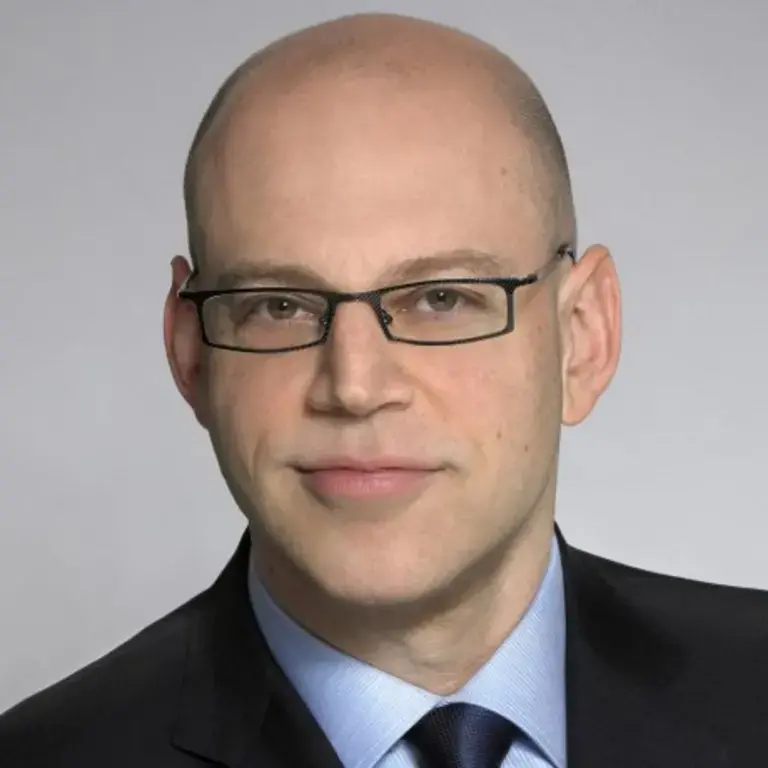
By Sim Segal, Program Director and Senior Lecturer in Discipline, Enterprise Risk Management, Columbia University; President, SimErgy Consulting
Learning AI may protect your job in the short term. But over time, AI-driven efficiency will reduce the demand for purely technical roles. If AI savvy isn’t sufficient, what is?
The more durable career paths combine technical expertise with the communication skills needed for live human interaction. Such technical roles typically include one or more of the following characteristics:
- A portion of data needed must be discerned from live interviews.
- Human trust must be present to trigger the free flow of data.
- Complex orchestration of live group meetings is needed.
One compelling example is enterprise risk management (ERM). This is especially true of value-based ERM. This approach integrates value-based management with ERM to create a dynamic strategic planning framework that quantifies the likelihood of achieving—or missing—strategic objectives. I do this work as a consultant and as the founder and director of Columbia University’s M.S. in Enterprise Risk Management program.
Data from Live Interviews
While value-based ERM begins with readily available organizational data (such as the baseline strategic plan) and model building, the most important data is from live interviews. These interviews must produce forward-looking possibilities about the future—what risks there are to this portion of the business, what risk scenarios are plausible, and what likelihoods should be attributed to each risk scenario. Conducting these interviews requires technical fluency and the ability to communicate, connect, and understand each interviewee enough to build a bridge of understanding that enables access to the human data required.
Doing this work requires a variety of communication skills, including listening, reading body language, and influencing others. This is best done by a technical professional with ERM knowledge as well as training in communication skills.
Human Trust
In value-based ERM work, the data gathered from live interviews requires establishing trust with the interviewee. Initially, interviewees may be reticent to open up even to explore these discussions, for a variety of reasons. A skilled interviewer must understand potential concerns—including, in one of the stages, a need for confidentiality—and establish human-to-human trust needed to gain buy-in and collaboration.
Successfully achieving this level of trust currently depends on uniquely human interaction. Human-to-human eye contact is part of establishing that trust. Other communication skills—again: listening skills, reading body language and adjusting to hidden or unconscious signals, influence skills, etc.—also play a part in establishing trust.
Orchestration of Group Meetings
In value-based ERM, there are critical group meetings that are challenging to conduct. One such meeting involves gaining consensus on prioritizing key risks (e.g., the top 20–25) from among all the risks identified. This typically involves all the senior-most personnel: the C-suite, the heads of business segments, heads of functions, etc.
Facilitating the discussions required to generate consensus demands business and technical risk expertise as well as the communication skills discussed earlier. This meeting is even more complex because it involves reading the room, interpreting multiple individuals’ body language simultaneously, knowing when to stay silent, when to interject, and how to adapt dynamically. This requires technical risk expertise combined with high-context communication skills—reading the room, adapting dynamically, and guiding diverse senior stakeholders toward consensus. Subtle communication skills must be applied in reading others’ body language while simultaneously being demonstrated through the facilitator’s own nonverbal presence.
Technical professionals in roles with such characteristics will remain indispensable. Value-based ERM exemplifies a technical discipline that remains resilient in the age of AI because it relies on live interviews to surface forward-looking risk data, human trust to enable candid information flow, and the complex orchestration of senior leadership discussions.
Views and opinions expressed here are those of the authors, and do not necessarily reflect the official position of Columbia University School of Professional Studies or Columbia University.
About the Program
The Master of Science in Enterprise Risk Management (ERM) program at Columbia University prepares graduates to inform better risk-reward decisions by providing a complete, robust, and integrated picture of both upside and downside volatility across an entire enterprise. For both the full-time and part-time options, students may take all their courses on Columbia’s New York City campus or choose the synchronous online class experience.
The application deadline for the M.S. in Enterprise Risk Management program is May 1. Learn more about the program here.