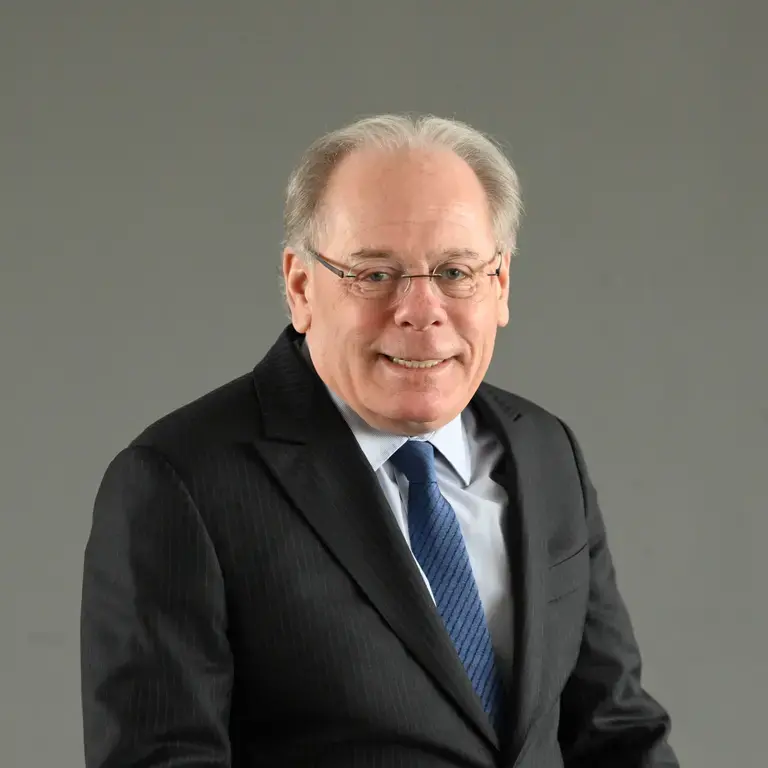

By Steven Cohen, Ph.D., Director of the M.S. in Sustainability Management program, School of Professional Studies
For over a century, technology has changed how we live, where we live, how we work, the nature of work, and how we spend our time. It has both created and remediated environmental pollution. Technological change leads to economic change that in turn leads to social and cultural change, which then impacts politics. The technology of transportation (planes, trains, bikes, and automobiles) has made us more mobile. The technology of communication (telephone, smartphone, radio, TV, cable, the internet) has exponentially increased the messages and images we send and receive, while lowering the cost of each message. The technology of computing has enabled us to create, analyze, and understand a more complex set of economic and social interactions. Other technologies have enabled us to grow food and manufacture products with less manual labor and to live in places so hot and arid that few wanted to settle there before air conditioning was common. Artificial Intelligence and robotics will continue the transformation from a brawn-based economy to a brain-based economy.
All of this has served to change gender roles, increase immigration, increase travel, and expose many people to different cultures and ideas. These factors have created the possibility of a sustainable economy that increases wealth without destroying our planet. Support for such an economy and indeed the expectation that we should work toward one is growing in the culture of young people, particularly in the developed world. Just as our values promote honesty and discourage violence, so too do we see a growing belief in protecting the planet.
In late August, I wrote about sustainability solutions, and one major solution I discussed was the development of the circular economy. I wrote then that:
“The current economy is linear. Production leads to consumption, followed by disposal of waste. In the circular economy, production leads to use, followed by reuse. Products are designed for remanufacturing. Business models include buying back products that have outlived their usefulness to mine them for valuable resources. The goal of the circular economy is to reduce waste and environmental impact. The value base of the circular economy is the notion that consumption is a means and not an end. The winner is the person with the richest life experiences, not the most stuff. Consumption is not regulated or discouraged, but focused on services, learning, social engagement, travel, and entertainment. Additionally, infrastructure and business models enable reuse of resources.”
Other elements of the circular economy are identified by Walter R. Stahel in The Circular Economy: A User’s Guide (Routledge, 2019), as well as in a variety of his other works, when he discusses keeping products functioning as long as possible through maintenance, repair, reuse, and remanufacturing before recycling materials. He also advocates modifying taxes, ownership arrangements, and measures of wealth to reward preservation of existing assets. These are sound approaches as well. The goal is to reorient business models and taxation to provide incentives for the circular economy.
The emphasis here, and in the work of the Ellen MacArthur Foundation, is to reorient the economic system and incentives that influence material consumption. I think we also need to redefine the culture of consumption itself to deemphasize material consumption and replace it with consumption of services, ideas, experiences, and social interaction. Humans have irreducible material needs for food, clothing, and shelter. Once those are assured in a post-scarcity economy, the crucial question is: What do people do with their time, and to what degree does it generate waste and damage the environment? An afternoon of hiking or biking uses fewer resources than a visit to a shopping mall.
Circularity needs to be both built on as well as the foundation of a sustainable lifestyle. About a decade ago, I began to define the sustainable lifestyle, and I wrote that the sustainable lifestyle:
“…does not require a monolithic one-size-fits-all limited way of life. You can build a zero-energy house on the outskirts of Houston and drive your electric car all over, or you can live in an apartment in Portland and bike, walk and take the light rail. What unifies the people pursuing a sustainable lifestyle is that consumption is a means and not an end. The winner isn’t the one who accumulates the most stuff, but the one who lives the fullest life, however that is defined. For some it may be in service to one’s community, for others it might be nurturing a grandchild. For some it may be creating a new way of sharing autos or homes, writing a song, making jewelry, inventing an application or developing a new way of managing an electric micro-grid. These choices are made possible by an economy where less and less of the GDP is devoted to the manufacturing of food, clothing and shelter. At one time, that was virtually all the economy did and it was how people spent all of their time. Today, we spend less of our time pursuing our basic needs. This means that more of our work and our time must be devoted to other pursuits.”
The idea is that the sustainable lifestyle and the circular economy do not require sacrifice but can enable a more interesting and exciting way of life. It requires systems-level infrastructure to ensure that energy is renewable and that garbage replaces the earth as a source of raw materials. That mass transit is available for transportation when population density permits it, and that electric vehicles and ride shares are utilized for transit when development patterns make mass transit less feasible. The circular economy requires new business models that reward resource reuse. It is capitalistic and market-driven, but the market is responding to demands based on a different sort of lifestyle. A key part of that is social engagement with people who have had a wide variety of lived experiences that they share with friends and even build businesses on. Travel, both physical and virtual, enables increased social interaction. More of our time is involved in information and social exchange via phone, email, as well as app-based exchanges that rely on WeChat, FaceTime, Zoom, and similar technologies. These engagements utilize very few material resources but are a major form of consumption in a sustainable lifestyle. A growing part of wealth is based on creativity, new services, entertainment, arts, health, education, wellness, fitness, along with exciting venues for social interaction. The high value-added part of the economy is in “software,” not hardware. We need hardware to use the software, but hardware like smartphones and laptops have become commodities that have longer and longer useful lives. New applications are highly profitable because they are based on ideas and have no physical properties. Artificial Intelligence (AI) requires the resources of data centers, but the large profits are not in the construction of data centers but in the inventions and potential for productivity gains enabled by AI. After the boom in data center construction ends, the real money will be in the monetization of AI. At some point, AI itself will become a commodity as it reaches its limits, and what AI can enable will bring the highest monetary reward. In any case, this concentration of capital and wealth in the products of analytics facilitates a higher degree of material circularity in our economy.
I realize that in the current American political environment, where our national government has decided that climate change is a hoax and that the protection of the environment is some kind of left-wing conspiracy, it seems a little incongruous to be discussing a circular economy and a sustainable lifestyle. Yet despite the current governing philosophy in Washington, the cultural change in our lifestyles is emerging. Technology has enabled a sharing economy where ownership is less central to “usership.” For young people who are unable to purchase, maintain, and insure cars, services like Uber and Lyft are a cost-effective alternative. Where once auto ownership was a goal, in the sustainable economy it is a means to an end, a way to travel to experience entertainment, work, spiritual, or social engagement.
In the developing world, we are not in a post-scarcity economy, and in parts of the United States and other developed nations, we still see high levels of poverty. In those environments, consumption remains a goal, rather than the means to an end. But we should see the sustainable lifestyle and the circular economy as a stage of economic development. It emerges once basic human needs are met. Ironically, the efficiency and productivity of circularity and the benefits of a sustainable lifestyle are luxuries when food, shelter, and clothing are not assured. As a political imperative, the drive for economic development is a necessity in the developing world. The smartphone images of the wealth of the developed world are easily accessible to the poorest of the poor. That creates a public demand for economic development that political leaders must respond to or risk political instability and loss of power. Concerns about renewable energy, material reuse, and pollution control are less important when energy supplies are unreliable or unavailable and material consumption for many is not assured. The fact that renewable energy and the circular economy help grow a nation’s wealth is secondary to the desperate need for economic development.
As we leave behind the first quarter of the 21st century, it is becoming clear that the complexity and interconnectedness of the global economy will continue to increase. There is simply too much wealth created when nations interact rather than isolate. A central response to that complexity has been the cultural change that has led to the development of a sustainable lifestyle. Technology has changed economic relationships, which in turn have influenced culture. That culture promotes the sustainable lifestyle as a key definition of “the good life.” Like the forces of gravity and a river flowing downstream, it is stronger than politics or ideology. That is why it will survive the onslaught of America First and all its associated federal government policies.
Views and opinions expressed here are those of the authors, and do not necessarily reflect the official position of Columbia School of Professional Studies or Columbia University.
About the Program
The Columbia University M.S. in Sustainability Management program offered by the School of Professional Studies in partnership with the Climate School provides students cutting-edge policy and management tools they can use to help public and private organizations and governments address environmental impacts and risks, pollution control, and remediation to achieve sustainability. The program is customized for working professionals and is offered as both a full- and part-time course of study.
Prospective students are invited to attend an upcoming in-person information session and alumni panel on the evening of October 21 to learn more about the program’s curriculum, admissions process, and flexible study options.