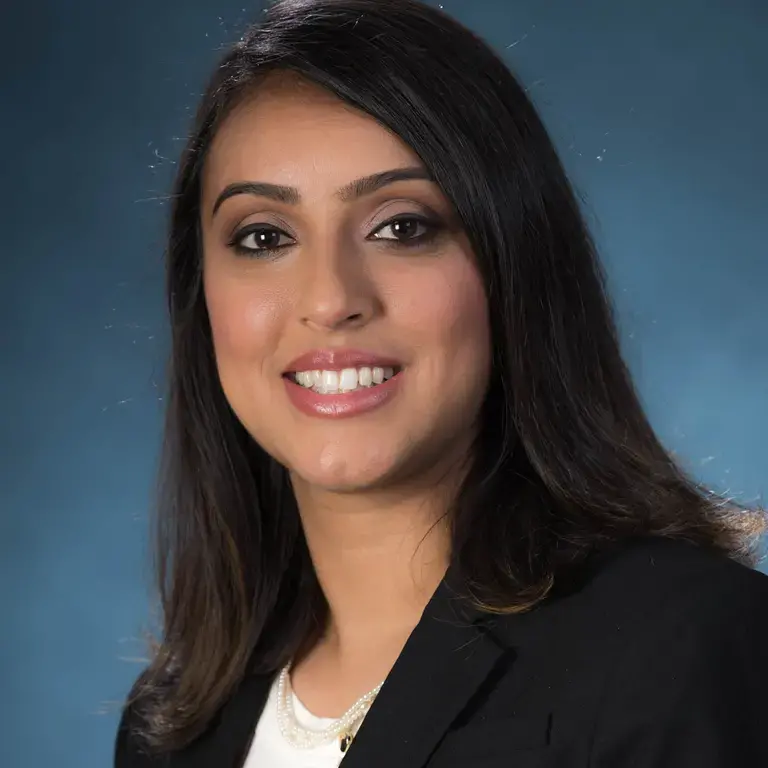
Sadia Janjua brings a practitioner’s perspective to project management education at Columbia University School of Professional Studies (SPS). An alumna of SPS and a longtime lecturer in Construction Administration (CNAD), she has built a career at the intersection of large-scale infrastructure, digital transformation, and organizational leadership. Her professional experience spans construction administration, project controls, and data governance across complex capital programs, where aligning teams, technology, and decision-making is as critical as technical design.
After earning her master’s degree from SPS in 2013 while working full-time in the field, Janjua returned to SPS as a lecturer, continuing a relationship that has shaped both her professional practice and her approach to teaching. Today, alongside her role at the Port Authority of New York and New Jersey, she leads digital transformation and data governance efforts across some of the region’s largest transportation and infrastructure projects, bringing real-world challenges directly into the classroom.
Janjua is now contributing to the development of the new Master of Science in Project Management at Columbia SPS, a program designed to reflect how project management is practiced today. As projects increasingly sit at the center of technology, infrastructure, sustainability, and innovation, the program emphasizes not only schedules and budgets but also data, governance, and stakeholder complexity. SPS’s practitioner-driven model, which connects students with faculty actively leading projects in the field, plays a central role in that approach.
In the Q&A below, Janjua reflects on her professional journey, her involvement in shaping the new M.S. in Project Management, and what she hopes students will take away from the program as they prepare to lead in complex, real-world environments.
Can you tell us a bit about your professional background and how it led you to project management and teaching at SPS?
My career has always lived at the intersection of large-scale infrastructure, technology, and people. I started in construction administration and project controls, working on complex capital programs where I quickly learned that even the best technical designs fail if teams, data, and decision-making are misaligned. That experience pulled me toward project management not just as a discipline but as a way to create clarity in complex systems.
I completed my master’s degree at Columbia SPS in 2013 while working full-time, often coming to class straight from project sites and long days in the field. Shortly after graduating, I was invited back to teach, which felt incredibly meaningful. SPS helped shape how I think and lead, and now I get to pass that forward by helping students bridge theory and practice in real, tangible ways.
How did you become involved with the development of the new Master of Science in Project Management at Columbia SPS?
My involvement grew naturally through my long relationship with SPS as both an alumna and a lecturer. Over the years, I’ve worked closely with faculty leadership to bring more industry-driven perspectives into the classroom especially around digital transformation, data, and governance in large programs.
As the new M.S. in Project Management took shape, it immediately resonated with the work I do every day at the Port Authority. Projects today aren’t just about schedules and budgets; they’re about technology, data, and navigating complex stakeholder environments. Being able to help shape a program that reflects that reality has been incredibly exciting.
What excites you most about this new program and its place within SPS?
What excites me most is that this program finally reflects how project management really works in today’s world. Projects now sit at the center of digital transformation, sustainability, infrastructure, and innovation, and this program prepares students for all of that, not just one industry.
SPS is uniquely positioned because of its practitioner-driven model. Students aren’t just learning from textbooks but from people actively leading projects in the field. That combination is powerful.
How does your experience in construction administration and industry practice shape your approach to project management education?
I bring the field into the classroom. In my current role at the Port Authority of New York and New Jersey, I lead digital transformation and data governance across some of the largest transportation and infrastructure programs in the country. That means dealing with real constraints, regulations, budgets, politics, and imperfect data.
Sometimes I walk into class straight from a meeting that didn’t go as planned, and we talk about why. Students learn that project management isn’t about perfection but about making smart, informed decisions when things are messy.
What do you hope students will take away from the M.S. in Project Management curriculum?
I want students to leave with technical confidence, strategic thinking, and the ability to lead in uncertainty. They should know how to build schedules and budgets but also how to influence stakeholders, use data, and guide teams through change.
Most of all, I want them to see themselves as people who can actually move organizations forward.
What would you say to prospective students who are considering this new program?
If you want a career where you can shape outcomes whether in construction, technology, sustainability, sports, or any industry really, this program will give you both the skills and the credibility to do that. SPS is designed for people who want to learn from the real world, not just about it.
What do you find most rewarding about working with SPS students?
SPS students are driven, thoughtful, and incredibly diverse in their experiences. Many are balancing demanding jobs and families while investing in their futures. Watching them grow in confidence and seeing them realize they belong at the table with senior leaders is the most rewarding part of teaching for me.
About the Program
The Columbia University Master of Science in Project Management program equips individuals with the strategic, analytical, and leadership skills essential for a successful career managing complex projects across industries and borders.
Available full-time or part-time, the M.S. in Project Management is designed for professionals who want to advance into leadership roles or formalize their project management experience with a strong academic and practical foundation. Students can opt for the general Project Management program or choose from one of the four specialized concentrations: Construction, Sports Management, Sustainability Management, and Technology Management.
Taught by scholar-practitioners and enhanced by Columbia’s location in New York City, the curriculum integrates emerging digital tools and AI-driven practices to help graduates make data-informed decisions and improve operational efficiency. Graduates will be prepared to lead high-stakes projects with confidence and clarity, and return to the job market with a competitive edge.
Learn more about the program here.