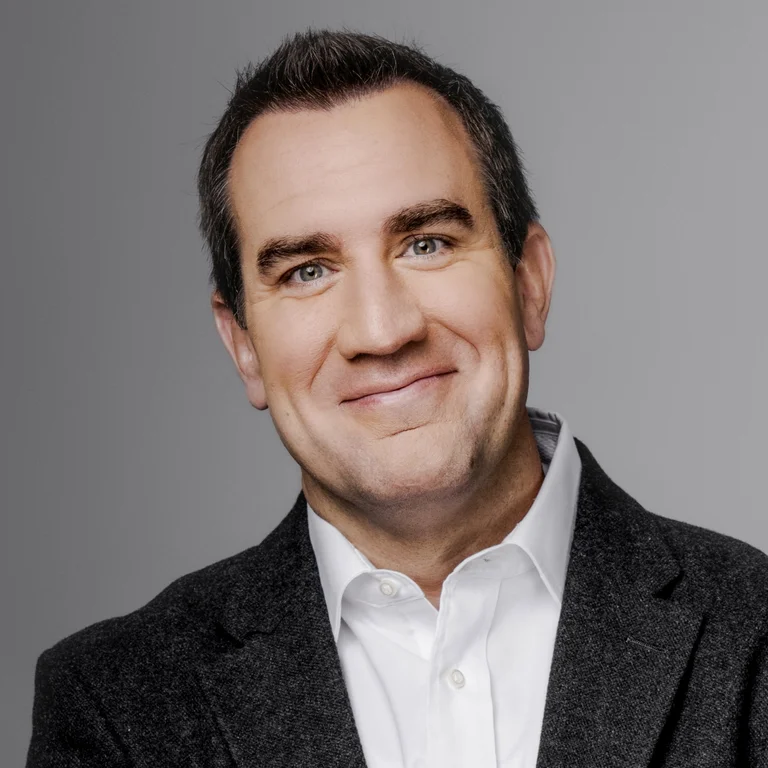
By Dr. Solange Charas, Professor of Professional Practice in Human Capital Management (HCM), and Dr. David Burkus, Part-Time Lecturer in the Enterprise Risk Management (ERM) Program, School of Professional Studies
Most professionals know the feeling. You leave an important meeting, presentation, or difficult conversation and, five minutes later, think: “I should have said that.”
Graduate education prepares students to know what to say. But professional success also depends on being able to access that knowledge, read the situation, and respond effectively in the moment.
That challenge inspired Leadership, Presence, and Influence, a 1.5-credit elective in the Columbia University School of Professional Studies M.S. in Enterprise Risk Management program. Taught by Dr. David Burkus, the course was developed collaboratively with Dr. Solange Charas, Professor of Professional Practice in Human Capital Management, and Paola Hadjilambri, who will serve as Teaching Assistant this fall.
The premise is simple: What students know matters enormously. But their ability to translate what they know into credibility, influence, and impact matters, too.
And that makes this a course with relevance for virtually every graduate student.
Preparing for the moments you can’t rehearse
What distinguishes Leadership, Presence, and Influence is its integration of performing arts techniques, behavioral science, and leadership development. Actors and improvisational performers learn to be present, listen closely, read cues, respond to others, and adapt when something unexpected happens. These are also critical professional capabilities. Research on improvisation in organizations, drawing explicitly on improvisational theater, suggests that improvisational capability can be developed through training and can contribute to performance when supported by the appropriate context.
Students study executive presence and adaptability ,and practice them. Through improvisation, simulations, role plays, performance exercises, video analysis, and peer feedback, students learn how to respond when conversations take unexpected turns. The goal is not to give them scripts for every professional encounter. It is to help them become more capable when there is no script.
The course design deliberately emphasizes performance under ambiguity, real-time application, experimentation, and feedback. That agility matters whether a student is interviewing for a first job, presenting a recommendation to senior leadership, responding to an unexpected challenge from a client, navigating a difficult stakeholder conversation, or advocating for an idea in a meeting.
The objective is to reduce those “I should have said that” moments — and increase the likelihood that students can recognize the opportunity and respond effectively while they are still in the room.

Learning to read the culture as well as the room
The course also rejects the notion that there is a single formula for “executive presence.” Presence is contextual.
A style that communicates confidence and credibility in an entrepreneurial organization may be ineffective in a highly regulated or hierarchical environment. Effective professionals need to understand not only their audience, but also the organizational culture in which communication is occurring. Students therefore explore cultural intelligence and organizational culture alongside voice, body language, storytelling, persuasion, improvisation, and decision-making. Research on cultural intelligence reinforces the importance of this capability, linking the ability to understand and adapt to different cultural contexts with better judgment, adaptation, and task performance. Students learn to recognize cultural cues and adapt their presence and communication accordingly — not by becoming inauthentic, but by developing greater behavioral range.
Throughout the course, students move from intentional professional presence and strategic storytelling to cultural alignment, improvisation, collaborative leadership, and professional visibility in hybrid environments. These are sometimes characterized as “soft skills.” They are better understood as professional performance capabilities.
Early evidence of impact
The inaugural offering enrolled only four students, but the early feedback was compelling.
One student praised the unusual combination of academic frameworks and experiential exercises, noting that Dr. Burkus's use of real-world stories and media "helped translate theory to practice." The student described leaving each class with both practice and "the skills to keep practicing on our own," and reported being able to apply the learning directly to current professional goals.
Formal evaluation rated the course Excellent, and a course they would definitely recommend to another student. Students felt strongly that they could apply the learning to their professional practice.
Then came another indication that the course was meeting a need: enrollment increased from four students in its first offering to 26 in its second — nearly sevenfold in a single semester.
The quality of the design has also received recognition within SPS. In approving the course, Kevin Visconti, Chair of the SPS Committee on Instruction, called the syllabus “exemplary” and praised “the value this will bring our students.”
That value is intentionally not confined to one discipline. The syllabus describes the course as an “applied skills accelerator” that bridges academic knowledge and workplace execution.
Sim Segal, Program Director and Senior Lecturer in Discipline, Enterprise Risk Management, sees that practical focus as valuable for students at different stages of their careers. “This course is outstanding!” Segal said. “It is packed solid with an incredible experience for students of all levels. The learnings will help anyone who wants to continue to advance their career into more of a leadership capacity.”
Ultimately, the course is about expanding students’ professional range: how to listen, read the room, understand the culture, adapt, and respond when the situation does not unfold as expected.
Because careers are shaped not only by what professionals know, but by what they are able to do with that knowledge in the moments that matter.
Views and opinions expressed here are those of the authors, and do not necessarily reflect the official position of Columbia University School of Professional Studies or Columbia University.
About the Program:
The Master of Science in Enterprise Risk Management (ERM) program at Columbia University prepares graduates to inform better risk-reward decisions by providing a complete, robust, and integrated picture of both upside and downside volatility across an entire enterprise. For both the full-time and part-time options, students may take all their courses on Columbia’s New York City campus or choose the synchronous online class experience.
The application deadline for the M.S. in Enterprise Risk Management program is May 1. Learn more about the program here.