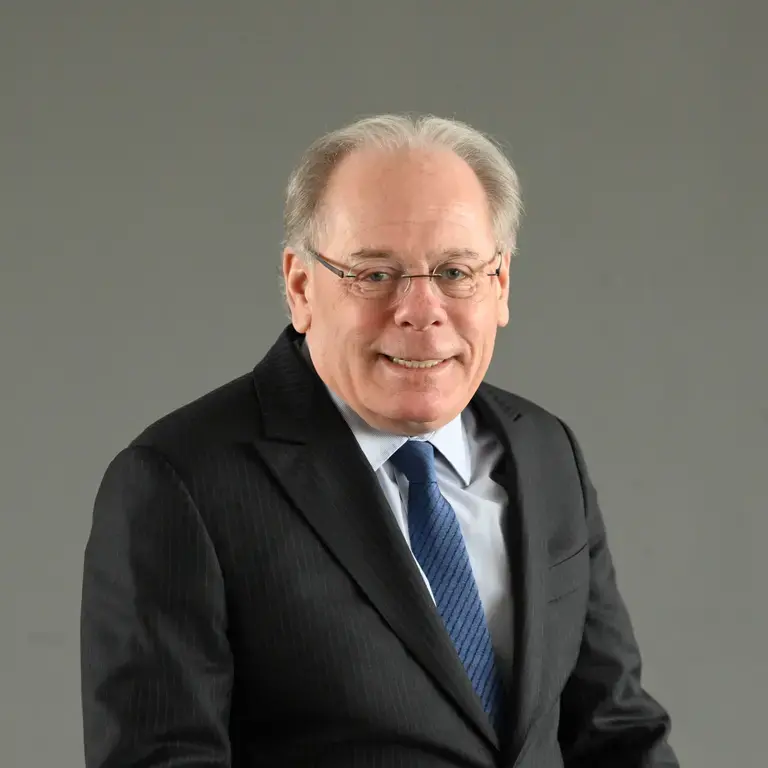
By Steven Cohen, Ph.D., Director of the M.S. in Sustainability Management program, School of Professional Studies
This past Friday, I attended the annual signature event of Columbia’s Sustainability Management Program, the Annual Sustainability Symposium. This is a day-long conference that is designed and managed by students in the Master of Sustainability Management program. Faculty and staff support our students, but the event belongs to the students. In many programs, the annual signature event is controlled by the program’s director and faculty. This is different, and it has been this way for a decade and a half. The students running the event are leaders in the Sustainability Management Student Association. They work with other student groups and invite everyone interested in environmental sustainability to attend. Attendees include students from the School of International and Public Affairs, the School of Professional Studies, the Climate School, and practitioners from the entire region. This is one of many student-led events organized by the environmental sustainability community here at Columbia. Another amazing event this past November was the day-long Women and Sustainability Uplift Summit. This impressive convening was held for the 6th time this year. The number and stature of the sustainability leaders attracted as panelists for this summit were stunning.
In reviewing the history of the Sustainability Management Student Association Symposium, this year’s event had the broadest and most explicitly systems-level agenda in the series so far. It began with an opening fireside chat on sustainable transportation and then featured panels on circular fashion, climate finance in emerging markets, U.S. transport electrification and critical minerals, sustainable sports venues, and sustainability careers, with both a networking lunch and a closing employer reception. As we have seen for many years, the speakers on each panel were knowledgeable and experienced practitioners who resemble our mission-driven and pragmatic students.
Compared with earlier conferences such as those we hosted in 2013, 2015, 2016, and 2019, which were shorter half-day or afternoon sessions, this year’s was longer, more cross-sector, and more explicitly employer-facing. In that respect, it represented the growth of the field itself, as we move from environmental sustainability into issues of organizational equity, inclusion, and community impact. It also reflects the priority our program and community place on career development and networking.
There is always a clear design in each student-led conference. In recent Symposium themes, 2023 was framed as “Closing in on 2030,” 2024 as “Solutions in Action,” 2025 as “Efficiency at the Source,” and 2026 as “Systems in Transition.” This year’s conference focused on whole-system transition and scaling.
As I reviewed past student conferences, I noted that the themes seem to match the evolution of our master’s program’s ever-changing curriculum. The 2013 Symposium established the symposium’s systems-thinking orientation with a conference theme of “The Systems Approach,” and by 2016, the event continued its development with a keynote from then-NYC sustainability chief Nilda Mesa, and panels on corporate innovation and resilient cities. The 2018 Symposium focused on resilient cities and climate communication; 2019 concentrated on real-world industry applications and included a careers fireside; 2020 assembled an amazing array of corporations, including JPMorgan Chase, JetBlue, Estée Lauder, and the Simon Property Group. Our interest in environmental justice came to the fore in 2021, with discussions of community resiliency, ESG disclosure, and climate justice. The 2022 Sustainability Symposium included panels on climate finance, entrepreneurship, zero waste, advanced analytics, climate justice, and the sustainability of the clean-energy transition. The 2024 symposium combined climate resilience, clean energy, fashion policy, sustainable business, storytelling, circular economy, and climate careers; 2025’s symposium added a critical-minerals circular-supply-chain hackathon and sharpened the agenda around energy, finance, materials, and sector-specific supply chains in fashion, electronics, and food. I am always impressed and indeed proud of the depth and scope of the conference our students conceptualize and organize.
A theme that also emerged in this year’s Symposium is how to frame our response to the attack on sustainability management by political opponents of what is termed “woke” management. In my view, this attack on sustainability was brought on by the ideological interpretation of some in our field viewing sustainability as a goal rather than as a means to attain goals. Our own sense of mission led us into a trap laid by proponents of the status quo and those benefiting financially from the current approach to managing organizations and the economy. It’s true that equity, inclusion, and environmental protection can be seen as goals. Starting in high school, I fought for racial and gender equity. I’ve spent decades working to protect the planet. I understand and believe in these as central personal values. But in management terms, they must be viewed as a means to achieve organizational goals, or they will be seen as frills or superfluous fluff. They don’t call profit the bottom line for nothing.
Tonight, my colleagues Guo Dong, Bill Eimicke, and I will introduce our new book, Sustainability Metrics and Management, at an event in Low Library. (If you would like to receive a recording of tonight’s discussion, please complete this form.) As I noted in an earlier post, this book presents sustainability as an integral principle of management designed to be integrated into sophisticated organizational management alongside financial and performance measurement and management. ESG issues (environmental issues, social issues, and governance issues) need to be viewed through the lens of management. In our view, environmental sustainability (“E”) approaches—energy efficiency, renewable energy use, water efficiency, material reuse and recycling, conservation, pollution prevention, and reduced release of toxics—are not simply methods of protecting the planet, they are methods of reducing expenses and increasing organizational efficiency and profit. As for social equity, inclusiveness, and transparency (“S&G”), we care about the diversity of the lived experiences of organizational staff, management, and governance because in a brain-based global economy, homogeneity is the enemy of creativity, and without innovation, organizations will lose to global competition. I recently read the history of Apple’s first half-century (Apple: The First 50 Years by David Pogue), and I can tell you, without the manufacturing expertise of China and the designs enabled by American freedom and creativity, none of us would be walking around with iPhones in our pockets. We need the distinctive competencies we obtain from those coming of age in different cultures. Equity, or treating staff with fairness, is necessary for an organization to retain talent. The most talented people in an organization have the most market value and are the most mobile, and if they believe they are treated poorly, they will leave. Finally, a company that ignores the wishes of its home community will confront the siting crises faced by many of the data farms and energy facilities required to develop Artificial Intelligence. Local communities control zoning and can prevent businesses from siting facilities they oppose. We live in a more complex, interconnected, resource-strained economy and on a planet threatened by biodiversity loss and global warming. Investors are conscious of environmental risk and consider it an element of financial risk. They want to know that management understands those risks. Successful organizations must be aware of the risks and opportunities presented by this complex world, and the field of sustainability management is designed to enable organizations to successfully navigate that world.
Here at Columbia, for most of the 21st century, we have been hard at work developing our professional training in environmental policy and sustainability management. It is a moving target whose hallmark has been constant change. Our greatest asset in this evolution has been the community of students, practitioners, and academics who have worked together to build this new field. Our students have been key partners in this effort to build a new profession. It has required our faculty to abandon the posture of academic arrogance and superiority to listen and learn from our students and many practitioners on the front line of efforts to implement sustainability management.
I noticed during Friday’s Symposium that the reduction of political support and funding from the federal government and the elimination of visible ESG efforts from some companies have impacted the morale of our students and practitioners. I do not minimize the impact of these opponents of sustainability management. It was nice to feel the wind at our back for a while, and facing headwinds is not as much fun. But market forces and the reality of an environmentally-challenged brain-based interconnected world economy means that companies more mindful of real-world constraints and opportunities will do better than those that believe they can ignore those realities. In 2010, I predicted that someday all competent management would be sustainability management. In 2026, I believe that prediction has become reality.
Views and opinions expressed here are those of the authors, and do not necessarily reflect the official position of Columbia School of Professional Studies or Columbia University.
About the Program
The Columbia University M.S. in Sustainability Management program offered by the School of Professional Studies in partnership with the Climate School provides students cutting-edge policy and management tools they can use to help public and private organizations and governments address environmental impacts and risks, pollution control, and remediation to achieve sustainability. The program is customized for working professionals and is offered as both a full- and part-time course of study.