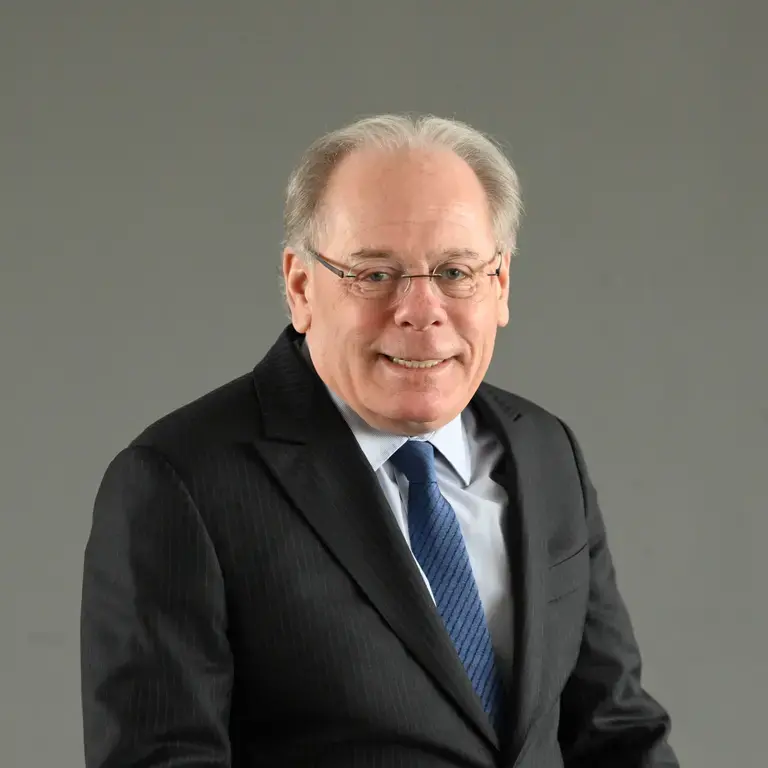
By Steven Cohen, Ph.D., Director of the M.S. in Sustainability Management program, School of Professional Studies
Last week, my colleagues Bill Eimicke and Dong Guo joined a call to discuss our roles in an event introducing our new book that will take place at Columbia University’s Low Library on the evening of April 6. The book, Sustainability Metrics and Management: The Path from Innovation to Routine, provides a clear contrast to a book I wrote a decade and a half ago, entitled Sustainability Management. That older book discussed what I now call “environmental sustainability,” a subfield of the broader field of sustainability management. Sustainability management back then was an effort to bring issues of environmental pollution and the use of renewable resources into routine organizational decision-making. My focus was on the use of energy and other materials such as water, the management of waste, and the reduction of environmental damage. Energy efficiency and renewable energy could reduce an organization’s cost of energy. Reduced pollution could limit an organization’s liability for environmental damage and the cost of clean-up.
At Columbia, we built a master’s program around educating professionals to become sustainability managers. Over the ensuing decade-and-a-half, we have seen a growing profession with an evolving set of analytic tools, such as green energy finance, life cycle assessment, greenhouse gas measurement, supply chain analysis, corporate sustainability reporting, environmental risk assessment, and a growing variety of key topics subject to analysis and discussion.
The evolution of sustainability management has reflected a cultural change we’ve seen in modern organizations as younger people coming of age in the 21st century take their place as organizational strategists and managers. Their attitudes and the culture they have created reflect the impact of technology on their lived experiences. Their worldview has been heavily influenced by several technologies: the internet, the smartphone, satellite communications, and low-priced jet travel. They have directly and virtually seen more of the world than any generation that preceded them. Not only do they have friends from around the world, but inexpensive communication also enables them to maintain friendships over many miles and for many years. Despite the efforts of a resurgent white power movement, most Americans have had extensive interactions with many people from many places, and they maintain relationships with a diverse network of friends and professional colleagues. They know that most of the planet is populated by people of many races, religions, and beliefs, and they are comfortable with diversity. Moreover, they value diversity, and have built their lives in pursuit of diverse experiences, friends, and ideas.
Inexpensive air travel has made it easier for young people to visit other countries, study abroad, find work farther from home, and stay in touch with relatives and friends in different places. The internet has changed how young people learn, make friends, shop, relax, and build community. They can get information instantly, join global networks, and express themselves through words, images, and videos. Foreign languages no longer impede communication as translation programs facilitate dialogue and understanding. Smartphones facilitate continuous interactive global communication since people carry the internet with them all the time. Young people can message friends, post content, watch videos, study, bank, and work from almost anywhere.
Moreover, they have directly observed our crowded and polluted planet while also directly experiencing incredible natural wonders. They live on a warming planet and always have. They have experienced extreme weather events and recognize that they live in unprecedented times. All of this has shaped their view of how the world works. In organizational life this has manifested itself in demands for equity, inclusion, and environmental stewardship. It is no longer acceptable for a woman to earn 75% of the salary of a man doing the same job. In a global brain-based economy, searches for employees need to be global with merit at its core, but an element of merit is the need for staff and managers who possess a diversity of lived experiences. The creative work that is at the heart of modern organizations requires people who have seen the world in different ways. These different perspectives interact, making the whole greater than the sum of the parts. Homogeneity may be comfortable for the insecure, but it is destructive to organizational creativity and competitiveness.
These trends are reflected in the evolving definition of sustainability management and have dramatically expanded the sustainability metrics that organizations now collect, analyze, and manage with. In addition to environmental metrics, we now utilize data on organizational inclusiveness and equity, along with the transparency of organizational governance and the impact of the organization on its host community. I have termed this mindful management. An organization that pays attention to its impact on its human resources, its customers, and the communities and planet it operates in.
What is critical to understand is that this is not “woke management,” because these management considerations are not goals, and they are not self-justifying. They are means to the private sector end of profit, market share, and return on equity. In the public and non-profit sector, they are means to achieving the goals set by the organization’s mission. The world economy is increasingly complex and interconnected, and the old idea of “macho-management,” charging through obstacles instead of navigating them, does not work in today’s difficult-to-predict environment. We see an example of this macho approach with U.S. Secretary of Defense Pete Hegseth as he pursues war with Iran. His “warrior ethos” is one of strength without strategy. Or the Trump Administration’s destruction of USAID and the Voice of America. These methods of expressing soft power in the world were dismissed because they were thought to be contaminated with ideology. There was nothing perfect about these organizations, and they could have been reformed, but they were not seen as tools for operating in a complicated environment and exercising soft but influential power. Similarly, you might compare the mindlessness of the Departmentof Government Efficiency’s (DOGE’s) mindless destruction of federal agencies to the Clinton-Gore multi-year effort to reinvent government. Reinventing Government under Al Gore cut about 400,000 government workers while adding more flexible contracted workers to perform critical functions. The Trump-Musk-Hegseth outmoded approach to management depends on force and fear and is a technique that sometimes brings short-term gain but always results in long-term loss.
Sustainability Management’s mindful management is replacing old-fashioned, out-of-date, and even dangerous mindless macho management. While a decade and a half ago, I would have been content with an organization internalizing environmental sustainability, today, that alone is not sufficient. The natural environment poses opportunities and risks, but many other elements of organizational life must be carefully addressed. In our new book, we spell these risks out in detail and provide examples of sustainability metrics that organizations can use to navigate today’s realities. The goal is to both minimize risk and convince investors that you are paying close attention to risk.
Being careful does not ensure the absence of risk, it only enables an organization to calculate the degree of risk. There are times when risk-taking is necessary, and just as you shouldn’t charge ahead for the sheer thrill of it, if an organization is risk-averse, it will miss opportunities that it needs to explore. Every organization operates in an economic, political, social, and ecological environment that it needs to understand to obtain the resources and revenues required to survive and thrive. Sustainability management seeks to understand that environment, measure it, and measure the organization’s ability to engage in it. It is a more comprehensive system of management than the one that preceded it. It is also being integrated into routine organizational management. We may continue to see distinct sustainability functions in organizational life, but just as financial and information management became integrated into overall management, so too will sustainability management be integrated into routine management decision-making. In many organizations, that process is well underway.
Views and opinions expressed here are those of the authors, and do not necessarily reflect the official position of Columbia School of Professional Studies or Columbia University.
About the Program
The Columbia University M.S. in Sustainability Management program offered by the School of Professional Studies in partnership with the Climate School provides students cutting-edge policy and management tools they can use to help public and private organizations and governments address environmental impacts and risks, pollution control, and remediation to achieve sustainability. The program is customized for working professionals and is offered as both a full- and part-time course of study.