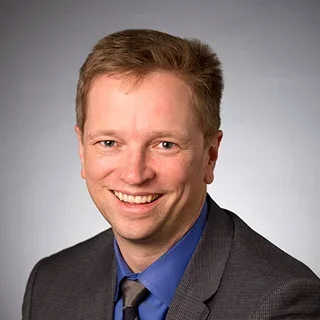
How does a communications specialist become a player on the field of global health? Start with a master’s from SPS.
At SPS, Poul…
- Developed a strategic mindset
- Radically changed his approach to communications
- Learned how to apply his skills to the fight against crippling disease
- Helped raise millions for the Task Force for Global Health
- Became part of something bigger than himself...
You were already working at the Task Force for Global Health. Why take on the added responsibility of a Master's Program?
The task force tackles a host of large-scale problems, such as the lack of clean water, blinding trachoma, river blindness, and multi-drug resistant TB. We help alleviate suffering and remove barriers to healthy, productive lives. In some small way, I think communications propels that work forward.
How did your experience at SPS impact your work?
Over the past few years, I've worked to build a communications program from the ground up. I applied my strategic communications expertise at all levels, from fundraising, to business development, to employee recruitment. We are purchasing a larger headquarters and I am charged with raising $24 million for this project. What I learned at SPS made this possible.
Your organization won a major award for its work.
Yes, we won the Conrad N. Hilton Humanitarian Prize, the largest award of its kind at $2 million. This happened not too long after I graduated. The Hilton Prize is our coming out party and has given us an incredible opportunity to tell our story.