By Camryn Louder, Student in the M.S. in Sustainability Science Program, School of Professional Studies
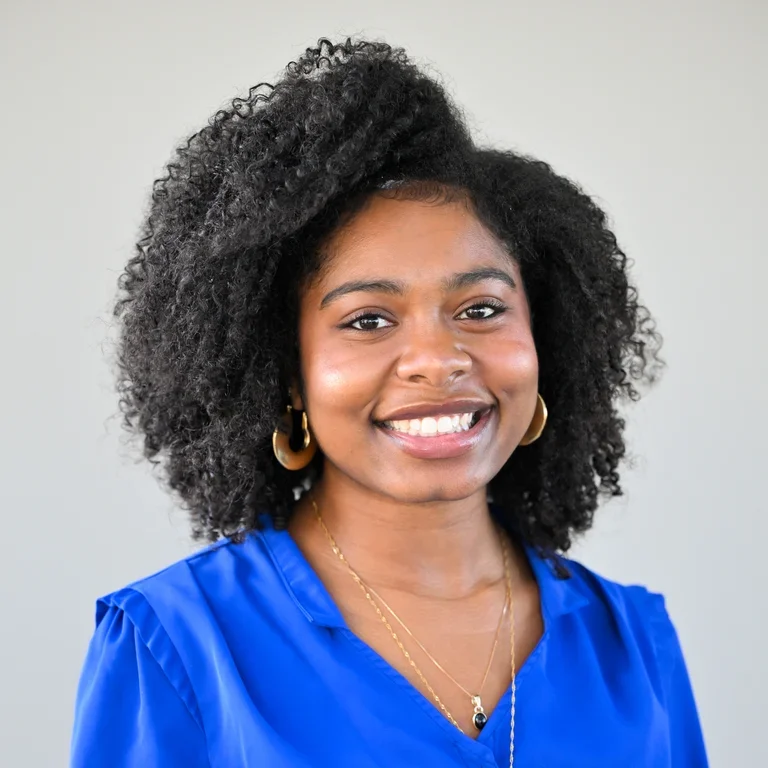
Growing up in Jamaica, known to its Indigenous Taino people as “The Land of Wood and Water” for its lush forests, rushing rivers, and natural beauty, Khande-Jae Fisher was always surrounded by abundant natural resources like sunlight and wind, but she noticed that they were underutilized. For Khande, this disconnect wasn’t just disappointing, it was a call to action. To turn that untapped potential into real, sustainable solutions, she knew she needed advanced technical skills, practical tools, and a global perspective. That search for the missing piece in her mission led her to Columbia University’s M.S. in Sustainability Science (SUSCI) program, where she is now combining her technical background with cutting-edge sustainability science to drive change at both local and global levels.
What motivated you to pursue a professional path in sustainability?
Sustainability has always been an initiative close to home for me. I began developing my technical skills in high school, when I was introduced to green chemistry. Green chemistry is about finding ways to minimize pollution and making scientific processes more sustainable. As someone who’s always been a bit of a chemistry nerd, I loved learning how it could be harnessed to protect the environment. I feel fortunate that what started as a fascination with chemistry has evolved into a meaningful passion that now serves as the foundation of my career.
Do you think other professionals from your home country could benefit from pursuing this path at Columbia?
I would absolutely recommend the SUSCI program. Pursuing this degree has been an unmatched opportunity to connect with like-minded peers and engage in dynamic, thought-provoking discussions with leading experts in the field. I’ve learned so much and gained so much insight just through my class discussions.
One of the program's greatest strengths is the small cohort size, which has made it easy to build genuine relationships and collaborate closely with other amazing students. I also value the flexibility to take courses across the University, including the Sustainability Management (SUMA) program, which has allowed me to design an experience to match my own evolving interests. I came in with broad goals, but through this program, I’ve been able to refine and focus them.
In what ways has the program supported your growth and helped you turn your goals into reality?
One of my goals coming into the program was to connect my technical background in materials engineering to real-world sustainability challenges. The SUSCI curriculum has been instrumental in helping me achieve that. The flexibility to shape my coursework has allowed me to broaden my skill set and clarify my career objectives. I've gained the tools and perspective needed to apply technical solutions in practical, impactful ways.
Your studies have clearly deepened your perspective on the field. Is there a particular sustainability solution or innovation that’s capturing your attention right now?
I’ve recently been drawn to AI-driven tools for improving efficiency, and I’m also passionate about energy. Optimizing the built environment presents a massive opportunity, and I’m fascinated by how AI and data-driven insights can enable smarter, more sustainable decisions in real time. I’ve also been exploring circularity principles, and I am inspired by the innovative work being done in that space.
Coming from such a rich cultural and environmental background, how do you think your unique perspective has influenced the way you approach sustainability?
Sustainability touches every aspect of our lives. I believe that in the future, extractive and short-sighted models simply won’t succeed. Being part of this paradigm shift has been deeply meaningful to me. The SUSCI program has been invaluable in helping me reflect on how I can contribute, not just as a professional, but as a global citizen and as a change agent. For others with technical backgrounds like mine, I strongly encourage them to explore this program. The past academic year has been absolutely transformative and has broadened my perspective on what’s possible.
What’s next for you?
My goal is to work in corporate sustainability, ideally in an advisory role where I can help companies navigate the technical challenges of becoming more sustainable. I’m particularly interested in working at the intersection of profitability, environmental responsibility, and social equity. I firmly believe these goals are not mutually exclusive and that, when done right, sustainability becomes a win-win for the public and for industry. I'm passionate about contributing to this shift in mindset and demonstrating that business success and environmental stewardship can go hand-in-hand. Ultimately, I intend to take this expertise back with me to Jamaica to advance sustainable business practices there.
About the Program
The Columbia University M.S. in Sustainability Science program, offered by the School of Professional Studies in partnership with the Climate School, prepares students for management and leadership positions in which they help organizations address environmental impacts. Students learn strategies to respond to the ever-changing environment and predict future environmental changes—and the impact on corporations, not-for-profits, and the public.
Designed by Research Faculty at the Lamont-Doherty Earth Observatory in collaboration with Columbia’s Earth Institute, the program develops a new generation of scientific leaders through a cutting-edge curriculum led by the world’s top sustainability scientists, the majority of whom are Lamont Research Professors. Graduates are well prepared for management and leadership positions, armed with the scientific expertise to drive meaningful environmental change and lead organizations in a rapidly evolving sustainability landscape. With the flexibility to choose from a variety of courses, students can tailor their education to career goals, while New York City serves as a living laboratory for sustainability innovations and connects them with employers actively seeking program graduates.
The spring 2026 application deadline for the M.S. in Sustainability Science program is November 1. Learn more about the program here.