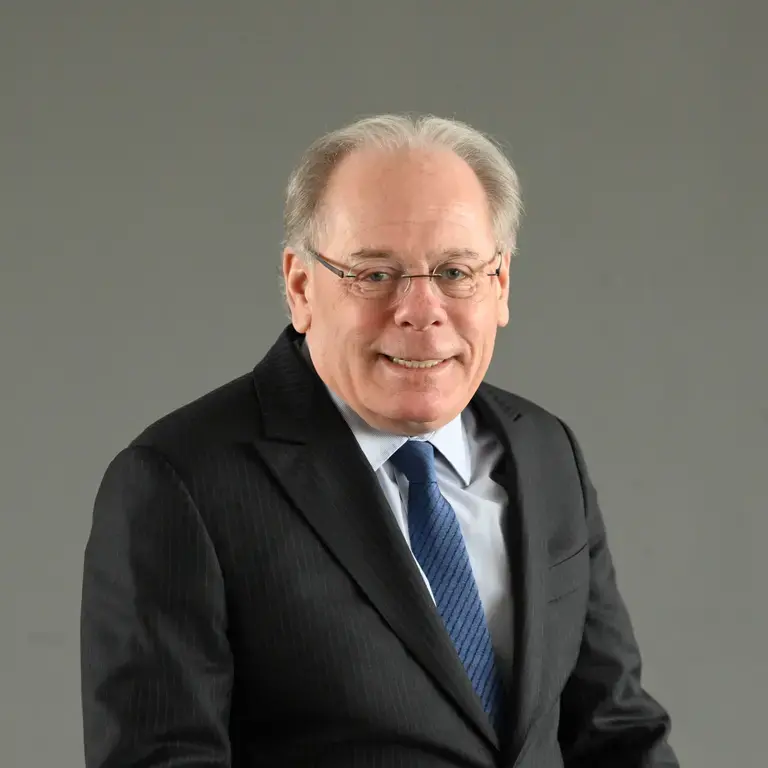
By Steven Cohen, Ph.D., Director of the M.S. in Sustainability Management program, School of Professional Studies
Tomorrow, we begin orientation for the new class of Sustainability Management master’s students at Columbia University. The program began in 2010 as a partnership between Columbia’s Earth Institute and School of Continuing Education (SCE). SCE evolved into the School of Professional Studies, and some parts of the Earth Institute are now located within the Columbia Climate School. The Sustainability Management program is now a partnership between the Climate School and the School of Professional Studies. The field of sustainability education persists and grows despite attacks on environmental protection and sustainability by the fossil fuel and anti-regulatory fanatics now running the United States government.
Not content being the world’s largest producer of fossil fuels, the Trump Administration is closing a deal to control Venezuela’s oil reserves. According to a piece by Rebecca F. Elliott, Simon Romero, and Edward Wong in this past Saturday’s New York Times:
“President Trump said late Friday that the United States had struck a deal to take majority control of a huge portion of Venezuela’s oil reserves, pointing to a sweeping effort to assert U.S. dominance over energy in the Western Hemisphere. The agreement amounts to a highly unusual foray into another country’s oil fields through a partnership with a private company, the State Department said through a U.S. official… The deal would give the United States control of more than 65 billion barrels of proven oil reserves, Mr. Trump said in a social media post. That is almost as much as all of the proven reserves in the United States.”
It's true that our economy is using more energy than ever and that while renewable energy technology continues to develop, we will continue to need fossil fuels. Despite the approach of America’s government, other nations, especially China, and most private investors are investing more in renewable energy than in fossil fuels. By contrast, our national government is paying billions to wind energy developers to change gears and build oil rigs. They are determined to ignore our warming planet and pump as much oil from the ground as humanly possible. Global warming, like our growing deficit, will leave our children and grandchildren a mess that they will need to deal with.
Washington’s hostility to environmental protection and sustainability management is not helping our field develop, but our faculty, students, and graduates persist in the face of these headwinds. New sustainability master’s programs are being fielded every year, and according to Mastersportal.com, there are over 150 in the United States alone, compared to only a handful a decade ago. Our Sustainability Management graduates have always gravitated to the private sector, and that continues. However, most are avoiding any employment either in or dependent on the U.S. national government.
Our community of faculty, students and alumni recognizes that there is opposition to sustainability and fewer visible actions to advance sustainability in some private organizations. Interestingly, we are also seeing organizations integrate sustainability actions into routine management. When Lisa Jackson, Apple’s sustainability chief, retired early this year, she was not replaced, but the organizational units she managed now report to the chief operating officer. What was innovative at Apple a decade ago is now routine. Additionally, we are seeing employers actively seeking graduates who can conduct life cycle assessments, measure greenhouse gases, develop renewable energy projects, and produce corporate sustainability reports. Investors continue to seek analyses of an organization’s environmental risk and look for skills in green investment. The “green economy” remains the fastest-growing part of the global economy. Electric vehicles, batteries, solar arrays, wind power, water filtration and sewage treatment, heat pumps, and analytic work to make our energy, food, and water systems more efficient are only a few of the many products and services that comprise the green economy. Our field is a response to environmental, economic, cultural, and global reality. That reality presents real challenges and leaves little time to rename Great Lakes or build ballrooms and golden arches.
I’ve learned a great deal over four decades of developing and modifying graduate programs designed to prepare professionals for public service leadership and jobs in private and nonprofit sector management. I’ve learned the importance of balancing the practical skills required for employment and the skills and values needed for lifelong learning. I’ve also learned that academics must demonstrate humility when designing programs for professionals and learn to consult with and listen closely to practitioners who are much closer to the professional world our graduates must navigate.
Tomorrow night at orientation, about 50 of our instructors will introduce themselves and their courses. About half a dozen are full-time faculty who are not tenured, but senior professors of practice who work in both academic and practitioner settings. The remaining group is comprised of full-time practitioners who love to share their knowledge with our students. Our group of amazing practitioners includes:
- A foundation executive who was once in the senior leadership of the Wildlife Conservation Society
- The President of the Public Housing Trust
- A senior environmental manager in the Metropolitan Transportation Agency
- The Principal Data Scientist at Russell Reynolds, New York
- The Board Chair of WomenStrong International
- A well-known science writer who contributes to major media outlets such as the New York Times and CNN
- The Deputy Commissioner for Sustainable Development at the New York State Department of Environmental Conservation
- The founder and CEO of Natoora
- The Chief Sustainability Officer at Kenvue’s Global, who previously was a senior manager at Mattel, Estée Lauder, Revlon, and L’Oréal USA
- The Head of Energy & AI at Aspen Power
- A Senior Economist at The Conference Board
- The Head of Clean Energy Networks at Con Edison
- The CEO of the New York City Energy Efficiency Corporation
- The Director of Energy Policy, Compliance and Programs at the MTA
- The Senior Advisor for Policy and Sustainable Housing at the NYC Department of Housing Preservation & Development
- The Director of Sustainability at Coach
- A sustainability consultant who was at one time American Express’ first global Director of Sustainability
- The Senior Vice President, Global Sustainability for Colgate-Palmolive Company
- The Senior Counsel for environmental, social, and governance (ESG) products at Mastercard
- The Director of Sustainability and Government Affairs at ABM Industries
- The Vice President of Environmental, Social, and Governance (ESG) and Sustainability at Paramount Global
- A prominent New York State Senator
This is by no means an exhaustive list (the entire faculty can be seen here), but what characterizes our faculty is their sense of mission and their deep dedication to building our profession. Over a dozen of our faculty were once students in the Sustainability Management program. Others are graduates of other environmental programs at Columbia. All are engaged in the work our students are aspiring to perform. This group ensures that our curriculum is constantly changing and remains cutting-edge.
In addition, I have learned that it is better to create field requirements and populate them with electives than to require an extensive and inflexible core curriculum. The Sustainability Management program has only two required courses: a client capstone at the end and a sustainability management survey course at the start. The fields students are required to take courses in include interdisciplinary studies, economics and quantitative analysis, management and finance, public policy, and the physical dimensions of sustainability. Physical dimensions courses include environmental science, green building, energy efficiency, and other courses dealing with the physical world. The flexibility of the curriculum has enabled us to roll with the punches emanating from our nation’s capital and the retreat from sustainability by corporate leaders who only bought into the field when it was fashionable. Our flexibility has resulted in the creation of field courses, such as one in this academic year that will include a trip to China to see the impact of green industrial policy on Chinese corporations. It has also enabled us to adapt to the use of Artificial Intelligence as an analytic tool for sustainability analysts.
The field of sustainability management continues to persist and advance. As we greet our new students, I am confident that they will thrive and become valued members of our growing community of sustainability faculty, students, and alumni.
Views and opinions expressed here are those of the authors, and do not necessarily reflect the official position of Columbia School of Professional Studies or Columbia University.
About the Program
The Columbia University M.S. in Sustainability Management program offered by the School of Professional Studies in partnership with the Climate School provides students cutting-edge policy and management tools they can use to help public and private organizations and governments address environmental impacts and risks, pollution control, and remediation to achieve sustainability. The program is customized for working professionals and is offered as both a full- and part-time course of study.