
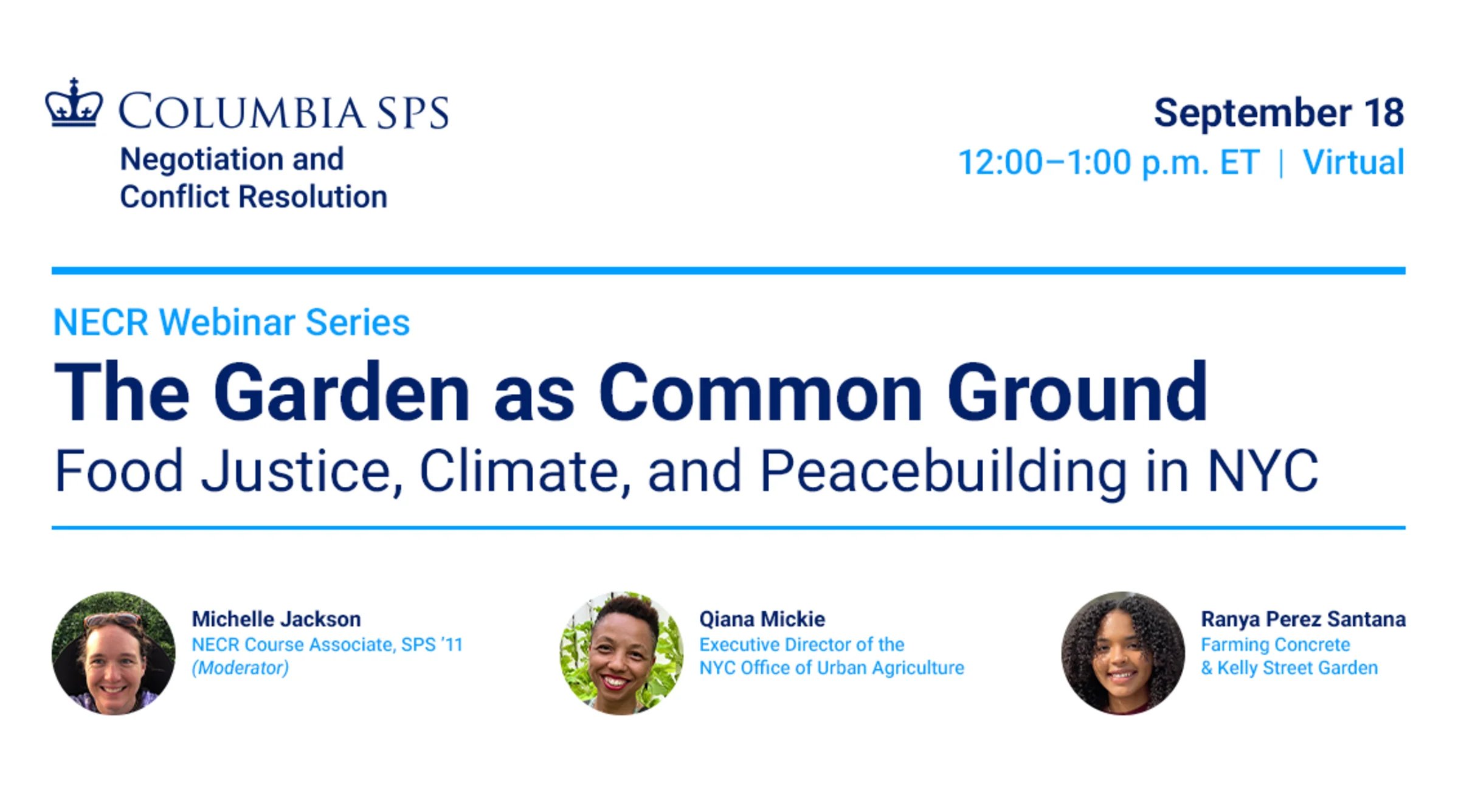
The Garden as Common Ground: Food Justice, Climate, and Peacebuilding in NYC
In New York City, urban agriculture is one of the most active areas for community healing, peacebuilding, and climate action. When communities grow food together, they’re also negotiating land use, rebuilding trust across difference, and creating space for collective agency. Gardens bring together people who didn’t choose one another—neighbors, strangers, different generations, different cultures—to share land, labor, and decisions. In ecology, this is called the edge effect: Where two different ecosystems meet, biodiversity naturally increases, resources are exchanged more freely, and overall yield is greater than either ecosystem produces alone. Community gardens work the same way. The friction between different people, perspectives, and ways of knowing isn’t something to smooth over. It’s the condition that fosters the most life.
Gardeners bring deep passion and strong opinions: about growing methods, land use, and who belongs. That friction is generative—but only when people stay in relationship through it. Community garden spaces are fertile ground to grow food and steward land while building communication skills, sitting with tension, and discovering what becomes possible when community holds together rather than fractures apart.
In this 50-minute conversation, two practitioners—one working at the community level, one at the policy level—come together to explore what urban agriculture makes possible.
Speakers:
- Ranya Perez Santana, Farming Concrete & Kelly Street Garden, brings a perspective rooted in land, community, and the belief that food is the entry point to addressing historical and systemic harm.
- Qiana Mickie, Executive Director of the NYC Office of Urban Agriculture, leads the development of a citywide strategy that connects grassroots organizing to institutional policy—advancing urban agriculture, environmental justice, and food equity across New York City.
- Michelle Jackson, NECR Course Associate, SPS ’11, creates the conditions for collaboration. A facilitator, convener, and social impact consultant, she has spent 25 years building participatory processes at the intersection of community, land, and justice. She is co-director of Farming Concrete and a member of the faculty at Columbia University.
Together, they’ll explore:
- How urban green spaces function as sites of peacebuilding and community building
- The relationship among food access, climate justice, and systemic inequity
- What it looks like when grassroots and institutional work move in the same direction
- How conflict transformation practices take root in community garden spaces