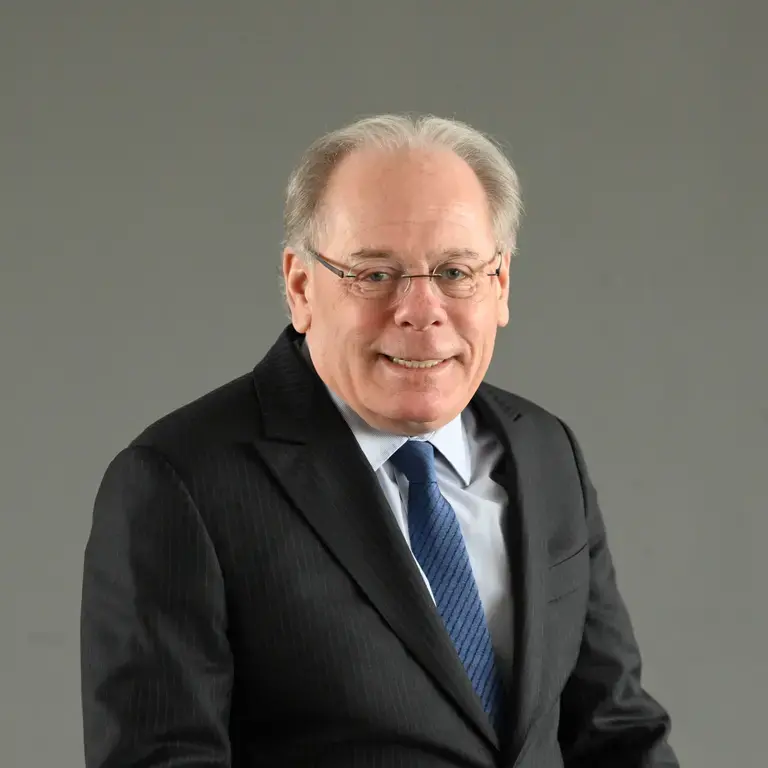
By Steven Cohen, Ph.D., Director of the M.S. in Sustainability Management program, School of Professional Studies
American higher education is under attack. Some of the attack is justified as ideology replaced open discussion in some fields of study. But most of it is mindless and shortsighted. Of particular concern is a set of visa restrictions designed to keep international graduates of American universities from staying here after they graduate and other restrictions making it more time-consuming and difficult to obtain student visas. These xenophobic impulses are based on the erroneous assumption that people from other countries harm rather than help our nation. Presidential aide Stephen Miller is the persistent author of these policies, but President Trump is his enabler in chief. The perspective and ambition demonstrated by people who travel thousands of miles and seek an education far from friends and family is an asset that has built this nation’s economy and culture. America is a nation of immigrants, and that is the basis of nearly everything exceptional about this country.
At Columbia University, we welcome and recruit international students. Each fall, I teach a large case-based course on sustainability management. There was a time when most of the case studies I built my course on were from New York City and the United States. Today, most of the cases are from other parts of the world. We live in a global economy, connected by supply chains and inexpensive, endless information and communication. We no longer have the option of tuning out the rest of the world. It’s terrific to teach a course based on global case studies to a class made up of both U.S. and international students. My global student body teaches each other perspectives based on their direct experiences and their observations of the different cultures, political processes and economic systems they grew up in. Even if you believe in “America First,” you can’t achieve first place by pretending the rest of the world doesn’t exist or that technology, travel, and communication haven’t created a world economy and global culture.
The attack on international students has increased recently, with a set of new regulations restricting the flexibility of study for international students. This summer, the Department of Homeland Security promulgated a rule that will take effect September 15, 2026. It replaces a flexible and education-based visa schedule with fixed visa periods limited to the length of the program of study and capped at four years. Students needing more time would have to apply to U.S. Citizenship and Immigration Services for an extension. The rule also shortens the post-program departure period and does not allow students to change their program of study.
Under previous rules, a student could remain in the U.S, if their host institution certified that they were continuing to comply with the requirements of the academic program they were enrolled in. Under the new system, a government-assigned date sets a firm deadline, exposing students to possible gaps in status if research, written work, medical issues, or administrative red tape extend their programs. In addition to the rules already in place, the Administration continues to develop new and creative ways to discourage international students. While the specific limits do not prohibit international students from studying in America, they create a negative and discouraging environment for international students. As bad as this new policy might be, the Administration is considering additional restrictions. In the Wall Street Journal last week, Michelle Hackman reported on the latest method being considered to discourage international students. According to Hackman:
“The Trump administration is considering attaching a $100,000 price tag on international students’ ability to work in the U.S. after they graduate from an American university, according to people familiar with the matter, a move that would make it much less attractive for foreigners to study in the U.S. If enacted, the fee would significantly advance President Trump’s efforts to restrict nearly all forms of legal immigration. It would particularly harm universities, which rely on recruiting international students as a reliable source of revenue, as well as top Silicon Valley and Wall Street firms, which disproportionately hire international college graduates to fill technical roles. The fee would be attached to a program called optional practical training, or OPT, which allows international university graduates to work for one to three years on their student visas. There were roughly 419,000 foreigners working on OPT in 2024, the latest year that data are available.”
While the United States is working hard to discourage international students, Europe and China are delighted to take the opposite path and are doing everything they can to compete with us and attract brainpower. The idea that international students are a security or cultural threat to this nation’s well-being is pure mythology. It is a manifestation of racism and xenophobia and does not account for the positive contributions of people from other lands who come here for an education and stay here to build businesses and raise families. It also surrenders talent to other nations eager to welcome highly educated young people able to help support their own shrinking and aging populations.
According to a 2008 study by Gnanaraj Chellaraj, Keith E. Maskus, and Aaditya Mattoo in The Review of International Economics entitled "The Contribution of International Graduate Students to US Innovation":
“The impact of international students in the United States on innovative activity is estimated [in this paper] using a model of idea generation. Results indicate that the presence of foreign graduate students has a significant and positive impact on both future patent applications and future patents awarded to university and non‐university institutions. Our central estimates suggest that a 10% increase in the number of foreign graduate students would raise patent applications by 4.5%, university patent grants by 6.8% and non‐university patent grants by 5.0%. Thus, reductions in foreign graduate students from visa restrictions could significantly reduce US innovative activity. Increases in skilled immigration also have a positive, but smaller, impact on patenting.”
Sadly, facts are unable to compete with ideological disinformation. The Administration considers immigrants an invading force that brings crime and economic dependence. The facts indicate that this is pure propaganda. Crime statistics demonstrate that the crime rate of immigrants is far lower than among non-immigrants. In a 2024 article published in the American Economic Association by Ran Abramitzky (et al.), a team of eminent scholars studied incarceration rates and noted that:
“We provide the first nationally representative long-run series (1870–2020) of incarceration rates for immigrants and the US-born. As a group, immigrants have had lower incarceration rates than the US-born for 150 years. Moreover, relative to the US-born, immigrants' incarceration rates have declined since 1960: immigrants today are 60 percent less likely to be incarcerated (30 percent relative to US-born Whites). This relative decline occurred among immigrants from all regions and cannot be explained by changes in observable characteristics or immigration policy. Instead, the decline is part of a broader divergence of outcomes between less-educated immigrants and their US-born counterparts.”
A global student body is a gift to American students and a defining characteristic of this nation’s world-leading university community. The classroom experience and out-of-class community built by students from here and all over the world is central to our educational value proposition. I have written about the joy of international education and discussed the local and national institution of International House, a very special place in Morningside Heights as well as in Chicago and Berkeley. As I observed back in May, 2025:
“Columbia’s neighborhood of Morningside Heights includes an important international education institution called International House. It provides living quarters for American and international students and includes active programming that encourages them to engage with each other. A few years ago, I gave a lecture there and learned about its residents and the way “I-House” cares for them. We were nearing the winter break, and I asked my host who remained and who traveled over the holidays. The director of student activities told me that the wealthy ones traveled home or to exotic locations. But for many students, their families had saved and sacrificed to send them to New York, and they could not afford to travel home for the holidays. She told me that every day International House had programs for these students: theatre, concerts, speakers, discussions, games, and tours. They were concerned that these students might feel depressed or left out. I was deeply moved by their care for these students. It is a central part of the mission of International House. According to their website:
“International House was the first global community of its kind, predating the United Nations by 21 years. For close to 100 years it has transformed the lives of more than 65,000 Alumni, which include not only Nobel Prize winners, heads of state, award-winning authors, singers, actors, and CEOs, but teachers, doctors, small business owners, community leaders and volunteers throughout the world. We achieve our mission of preparing leaders for the global community by building core values of Respect, Empathy, and Moral Courage through a lived experience that consists of organic encounters and a series of unparalleled programs offered within our Morningside Heights facilities. Additionally, we consistently seek out strategic partnerships to encourage diversity of thought and experience among our Residents.”
The unthinking attack on international education threatens this positive and even beautiful part of America’s system of higher education. It is a shameful and self-destructive act on the part of an administration that continues to come up with innovative ways to attack higher education.
Views and opinions expressed here are those of the authors, and do not necessarily reflect the official position of Columbia School of Professional Studies or Columbia University.
About the Program
The Columbia University M.S. in Sustainability Management program offered by the School of Professional Studies in partnership with the Climate School provides students cutting-edge policy and management tools they can use to help public and private organizations and governments address environmental impacts and risks, pollution control, and remediation to achieve sustainability. The program is customized for working professionals and is offered as both a full- and part-time course of study.