
Peter Dixon, Ph.D., Program Director, M.S. in Negotiation and Conflict Resolution; Associate Professor of Practice
In 2024, the New York City Council passed two laws officially recognizing parts of the city’s history that rarely make it into public discourse.
"From 1626 to 1827, the city legally sanctioned the enslavement of human beings of African and indigenous American descent.… After slavery was banned in the state in 1827, the city of New York continued to generate significant income from the illegal international trade of enslaved persons.”
This public recognition was remarkable. Even more remarkable was what these laws obligated the city to do in response: carry out its own truth and reconciliation process and launch a study on reparations.
This puts NYC in the company of a small group of U.S. cities and states reckoning with their own histories of slavery. This process of public historical reckoning—or transitional justice—is recognized by the international community as a necessary step in dealing with the legacies of large-scale abuses like human rights violations, genocide, and slavery.
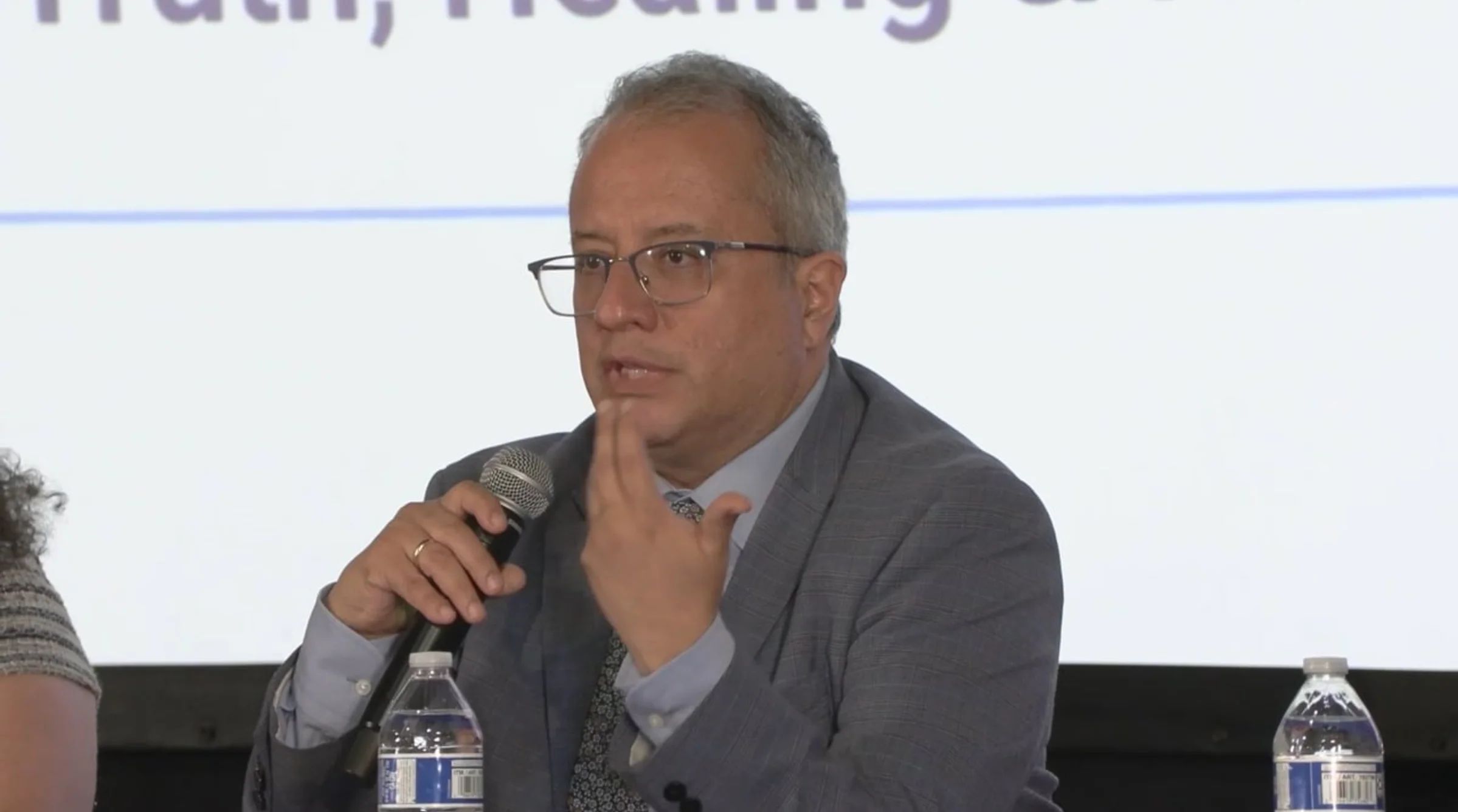
Eduardo González shares context and an overview of the long history of truth and reconciliation practices and opportunities for NYC to leverage knowledge from international processes.
In Colombia—as part of its process to implement the 2016 peace agreement that followed 50 years of civil unrest—entire national departments are devoted to truth, accountability, and repair. In NYC, that task has fallen largely to a small public office called the Commission on Racial Equity (CORE). CORE was established by NYC voters in 2022 as part of a City Charter revision to establish a citywide racial justice infrastructure.
In October 2025, Negotiation and Conflict Resolution (NECR) hosted CORE’s executive director, Linda Tigani, for a conversation about this historic work. She was joined by two consultants supporting her team: Tyrik Washington, an artist, producer, and storyteller, and Eduardo Gonzalez, an international expert on truth and reparations. The conversation was moderated by Sideya Sherman, the former NYC chief equity officer.
Putting Truth and Repair into Practice
In the early 1700s, New York City had one of the highest rates of ownership of enslaved people in the country. The legacies of slavery continue to reverberate throughout the city’s social, cultural, and economic life through racially motivated discrimination, segregation, and violence.
Tigani emphasized that the truth process and the reparations study are meant to operate as one integrated civic project. Notably, she said, the eligibility criteria for, and eventual form of, reparations are left intentionally broad in the law so they can emerge through the Commission’s work.
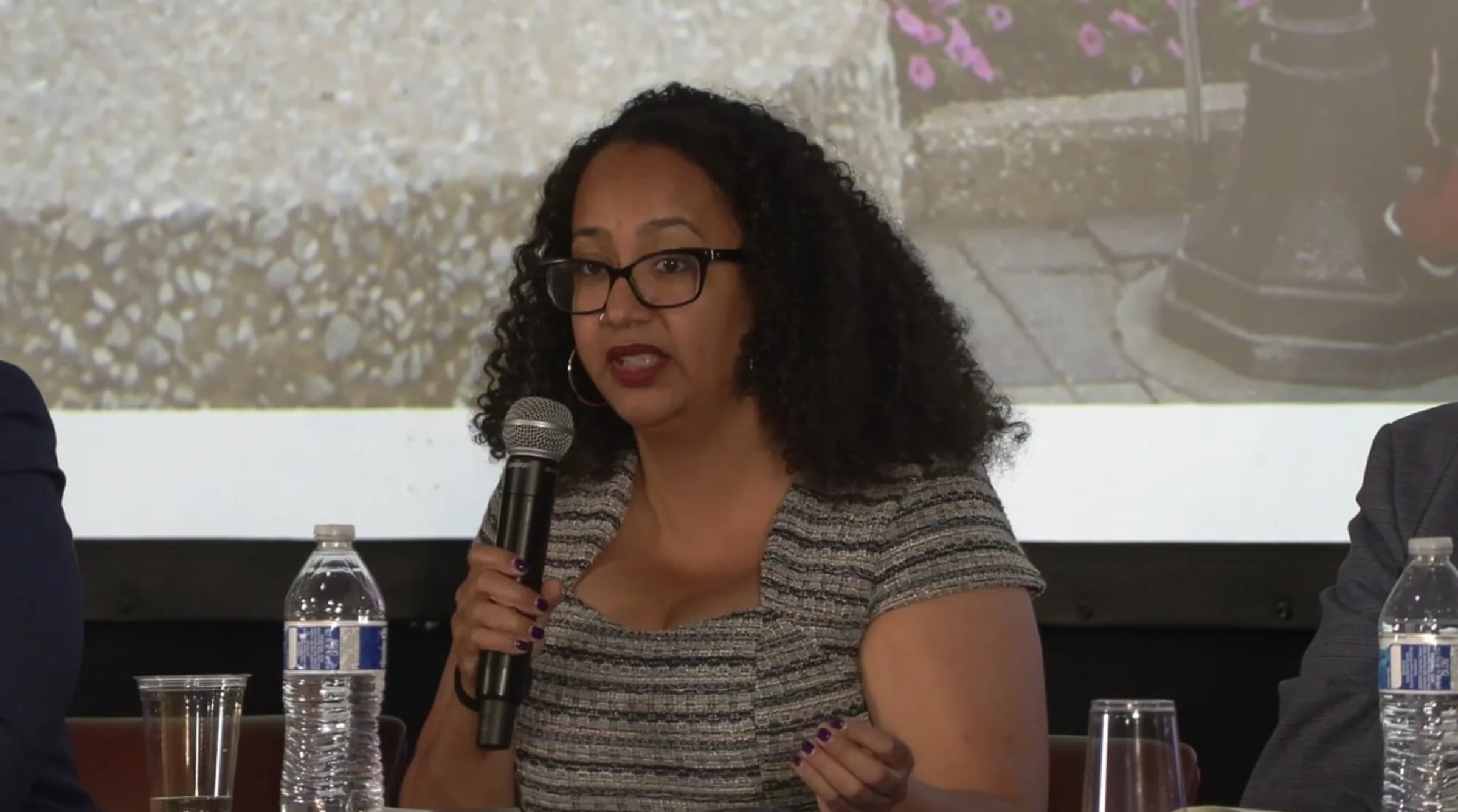
Linda Tigani discusses NYC’s Accountability Mandate to advance racial equity in government operations and increase community voice in decision-making.
Washington is advising CORE on community engagement. He emphasized the importance of carrying out this work in New York, which has the power to shift national narratives around historical reckoning. That same visibility invites resistance and distortion, however, making clarity and public communication central.
González located New York’s work within a global lineage of truth commissions and reparations efforts. He brings decades of work in transitional justice, including on Peru’s Truth and Reconciliation Commission. He framed truth and reparations as rights that are well established in international law and NYC’s efforts as part of history’s long march toward justice.
Truth as Healing?
Law 91 charged the city with creating a truth, healing, and reconciliation process. The links between transitional justice and healing are well established in theory, but the empirical evidence is mixed at best.
Public truth, reconciliation, and reparation processes are powerful because they establish boundaries where the state carried out and/or sanctioned violence on its own people: distinguishing between right and wrong, just and unjust, and victim and non-victim. The latter can be particularly polarizing.
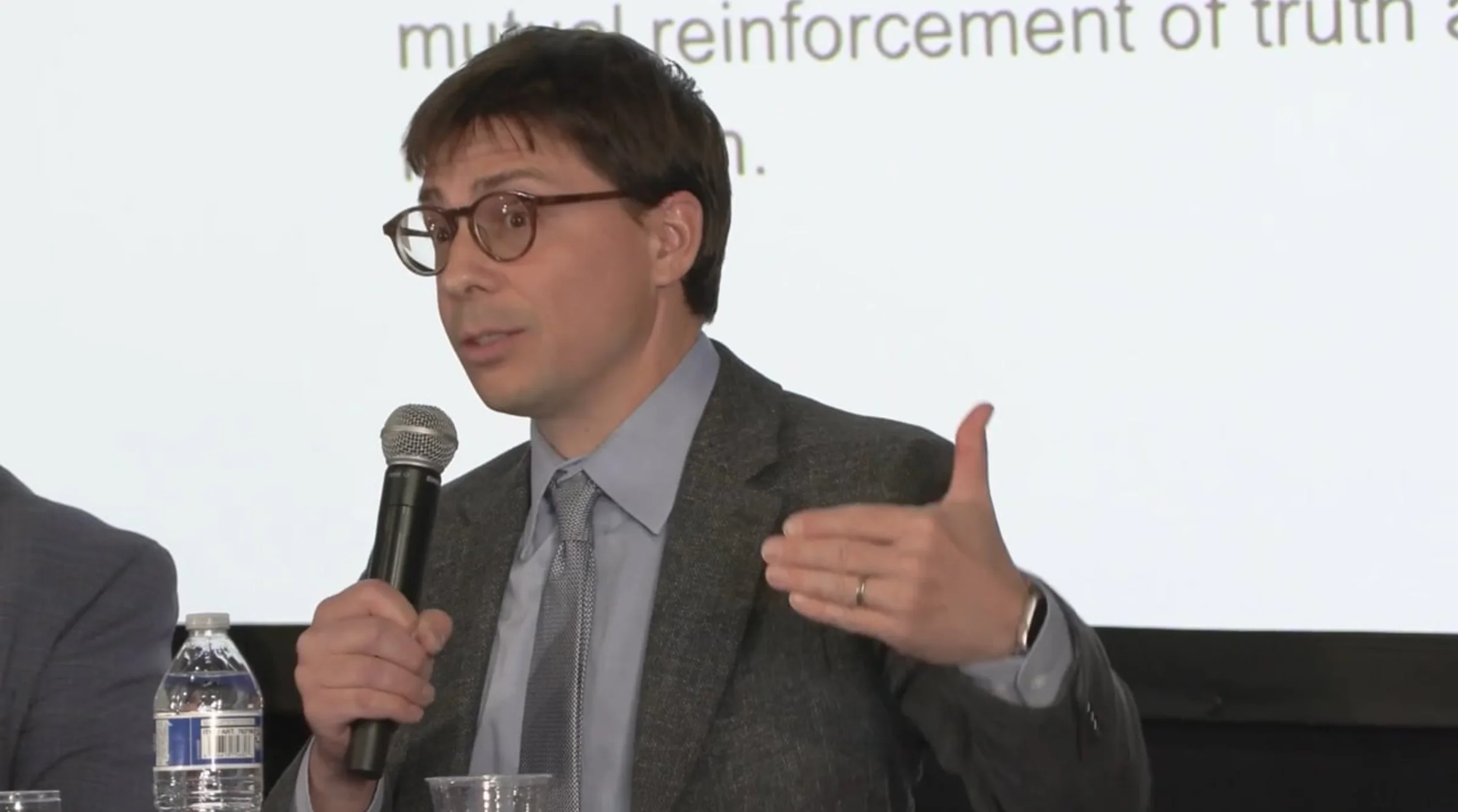
Peter Dixon highlights the importance of official recognition of harm, while also warning about the negative consequences when harm is misrecognized or inadequately acknowledged.
Where harm is widespread, diffuse, and directed towards entire communities—as in the U.S.—harmed groups can engage in a “politics of victimhood” in competition over key details like eligibility criteria and who is owed what. In my own research in Colombia and elsewhere, I saw how victims’ attitudes toward justice were influenced by their assessment of whether other impacted groups were receiving preferential treatment from the state. Fostering healing under these conditions is quite challenging.
Much of this comes down to the engagement process itself, as the Commission has rightly noted. Procedural justice is essential to healing because it dictates whether communities experience the state—often one that directly harmed them—as respectful and trustworthy or not. When communities themselves can define how they want to be heard and seen, official recognition can be transformative. When they are excluded, it can compound harm.
In New York City, the Commission’s engagement work is just getting underway, aiming to realize a historic mandate that puts NYC in unique company.
About the Program
Columbia University’s Master of Science in Negotiation and Conflict Resolution prepares students to analyze the root causes and dynamics of conflict and to transform disputes through reasoned and resourceful interventions. The program focuses on developing self-awareness, tenacity, and interpersonal competency; building common ground; opening lines of communication; ensuring representation and recognition, and building sustainable possibilities for resolution.
The program has on-campus and online (with residency) modality options. Learn more about the program here.


