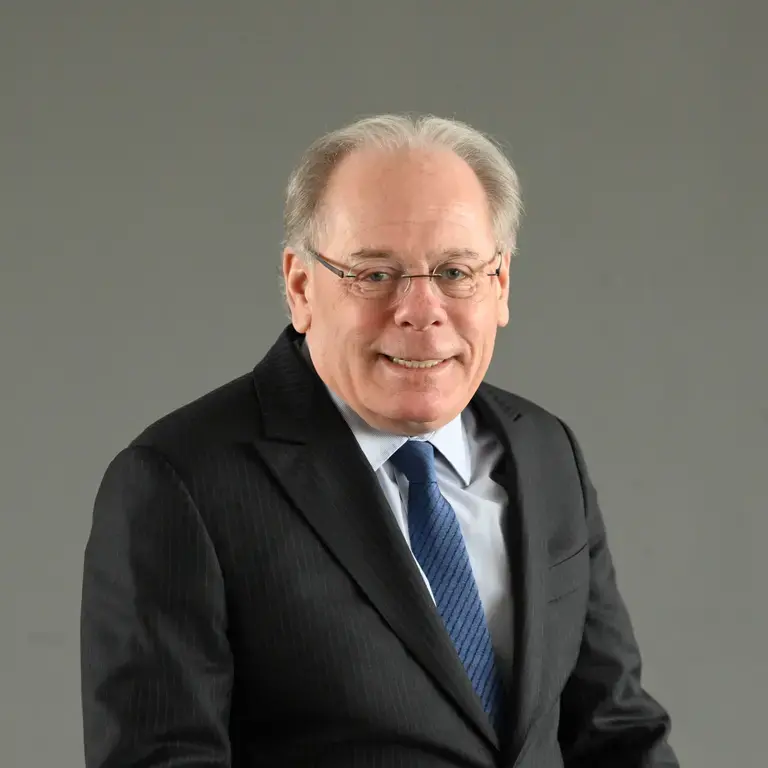
By Steven Cohen, Ph.D., Director of the M.S. in Sustainability Management program, School of Professional Studies
New York’s Governor Hochul has recently discovered that the decarbonization goals established in the 2019 Climate Leadership and Community Protection Act may not be feasible. The law requires a reduction of economy-wide greenhouse gas emissions by 40% by 2030 and 85% by 2050 (from 1990 levels). It requires the state to reach 70% renewable energy by 2030 and 100% zero-emission electricity by 2040. A memo from Doreen M. Harris, President and CEO of the New York State Energy Research and Development Authority, detailed a set of issues that impact the feasibility of meeting these goals, arguing that the costs were too high and the state did not have the ability to develop renewable energy resources as quickly as the law requires. According to her memo of February 26, 2026:
“If fully implemented with regulations to meet the 2030 targets, CLCPA’s original design—differing accounting standards from the internationally-accepted approach and inflexible near-term targets would combine to yield high costs to New York households and businesses. Addressing this cost escalation is essential to deliver a policy that supports affordability and economic competitiveness and is necessary to ensure continued progress on decarbonization policy. Absent changes, by 2031, the impact of CLCPA on the price of gasoline could reach or exceed $2.23/gallon on top of current prices at that time; the cost for an MMBtu of natural gas $16.96; and comparable increases to other fuels. Upstate oil and natural gas households would see costs in excess of $4,000 a year and New York City natural gas households could anticipate annual gross costs of $2,300.”
Environmentalists criticize these numbers as overly pessimistic, and perhaps they are, but my issue is not with the projections, but with the notion of aspirational targets and goals. My view of this grows out of work I engaged in decades ago, applying Total Quality Management (TQM) to the work of government. A central theme of TQM inventor W. Edwards Deming’s view of management relates to targets. He resists the use of numerical targets for individual workers and for organizations. Targets that are too high often result in shoddy performance. Consider the problems created by the Trump Administration’s excessive deportation targets. Instead of deporting criminals, they deport children. Their frenzy to reach numbers set by the White House has led to terrifying behaviors. On the other hand, targets that are too low can impair productivity. People coast when targets are too easy to achieve, since they don’t want anyone to raise the targets, and it’s easy to slow the pace of work. Climate advocates love targets. From the Paris Accords to New York State’s 2019 Climate law, aspirational targets are set, with little or no consideration of issues of cost, technological progress, or organizational capacity. Targets are easy to understand and provide a great rallying cry for advocates.
Instead of setting targets, a far better approach is to rigorously measure current levels of performance and then direct attention to operational tasks and investments that can improve performance. Once we understand where we are, we can then concentrate on constantly improving performance. The state’s effort to decarbonize its energy system is highlighted in NYSERDA Chief Harris’ testimony to the New York State Legislature’s Joint Legislative Budget Hearing on January 28, 2026, where she observed that:
“Together, we have delivered measurable progress with projects under construction, renewable generation, workforce growth, and direct benefits to New Yorkers, despite unprecedented federal headwinds. Today, approximately 25% of New York’s electricity is powered by renewables, with another 64 large-scale renewable projects in development that are expected to meet an additional 22% of statewide electricity demand. This is complemented by the ongoing contributions of our upstate nuclear fleet which is expected to contribute about 16 percent in 2030. New York State has installed over 7 gigawatts (GW) of distributed solar, reaching the State’s 6 GW goal ahead of schedule. The South Fork offshore wind project, completed in 2024, is delivering enough clean energy to power 70,000 Long Island homes. One of the state’s largest energy infrastructure projects in 50 years, the Champlain Hudson Power Express (CHPE) transmission project is nearly complete and will soon deliver another 2 GW of clean energy to the New York City region. Sunrise Wind and Empire Wind are anticipated to begin delivering electricity to the grid in 2026 and be fully operational in 2027.”
This record of progress is lost in the argument about reaching aspirational targets. The controversy over NYSERDA’s memo is that environmentalists believe that it presents a worst-case scenario of the impact of cap-and-invest. Cap-and-invest is a climate policy tool that sets an ever-declining cap on greenhouse gas emissions that requires large polluters to purchase allowances for their emissions. The funds generated by allowance purchases are then invested in decarbonization projects. Environmentalists believe that the state is too slow in implementing cap-and-invest and issuing regulations under the Climate law. Advocates argue that the law is not too strict, but that the state is not serious about implementing it. But if the state was not serious about decarbonization, how would they be able to demonstrate progress?
The state has delayed implementing the law largely due to issues of cost and feasibility. It’s true that in the long run, renewable energy and energy efficiency reduce the cost of energy. But in the short run, it appears that energy costs may increase. In a time when affordability is at the center of political concerns, even the perception of a cost increase can be politically toxic. In my view, it is not a question of the feasibility of the targets, but of the misguided thinking that leads to these symbolic policies. The state government and its energy utilities have bought into the argument that we need to modernize our energy system with a more efficient grid and increased use of renewable energy. But when the bill was enacted in 2019, 2030 seemed a long time in the future. The Trump administration’s irrational opposition to wind and love affair with coal might have been predicted, but it wasn’t. The spiking price of energy due to the war with Iran was also not considered: How could it have been?
A more effective law would require constant improvement in the use of renewable energy and in grid and consumer efficiency. It would require aggressive and audited measurement of improved performance. It would require annual plans for investment in new equipment and practices. The transition to renewable energy and smart grids requires massive amounts of capital, and the capital invested in the current energy system must also be amortized. Those sunk costs will not disappear and must be paid. In my view, the structure of the current law provides bragging rights to the state for enlightened climate policy but includes a design that detracts from paying attention to operational reality in favor of symbolic aspirational goals.
The probably correct assumption of environmentalists is that Hochul is repeating the slippery pattern she followed during the congestion pricing controversy. The Governor is avoiding anything that looks like a tax increase for environmental purposes during a campaign season. Unsurprisingly, this leads to mistrust, since it is disingenuous and dishonest political pandering. But in my view, the policy itself lends itself to this type of posture, as do the escape clauses written into the original bill that enable the state to delay policy goals if necessary.
There are arguments against my approach. It does not provide sufficient weight to the urgency of reducing greenhouse gas emissions. Continuous improvement might be too slow, unless we set goals around the rate of improvement needed. (A retreat into a different form of target.) The absence of targets makes accountability more difficult, since we have not clearly defined our goal. It also might make it more difficult to attract capital since the long-term goal is no longer as specific as it is when a clear target is set. Nevertheless, incremental improvement frameworks can be easier to maintain across administrations and political mood swings. They can be thought of as a long-term effort to modernize our energy system and can adapt to economic shocks like fuel spikes, wars, and recessions. Steadier progress over a generation may well provide better results than a cycle of ambitious goals that are either discarded by changing politics or delayed by financial, technological, or organizational constraints.
I would contrast the decarbonization effort with the construction of New York City’s multi-billion-dollar third water tunnel. It is not a perfect comparison, since the water tunnel did not require new technology. Still, like decarbonization, it was a massive and ambitious undertaking. It took many decades to complete the project, and it was never politically controversial, but it was Mike Bloomberg’s determined leadership that led to success. It was an excellent example of slow and steady winning the race. The state’s decarbonization law is mired in symbolic politics, a characteristic typical of climate policy that would benefit from a dose of realism, practicality, and credible leadership.
Views and opinions expressed here are those of the authors, and do not necessarily reflect the official position of Columbia School of Professional Studies or Columbia University.
About the Program
The Columbia University M.S. in Sustainability Management program offered by the School of Professional Studies in partnership with the Climate School provides students cutting-edge policy and management tools they can use to help public and private organizations and governments address environmental impacts and risks, pollution control, and remediation to achieve sustainability. The program is customized for working professionals and is offered as both a full- and part-time course of study.