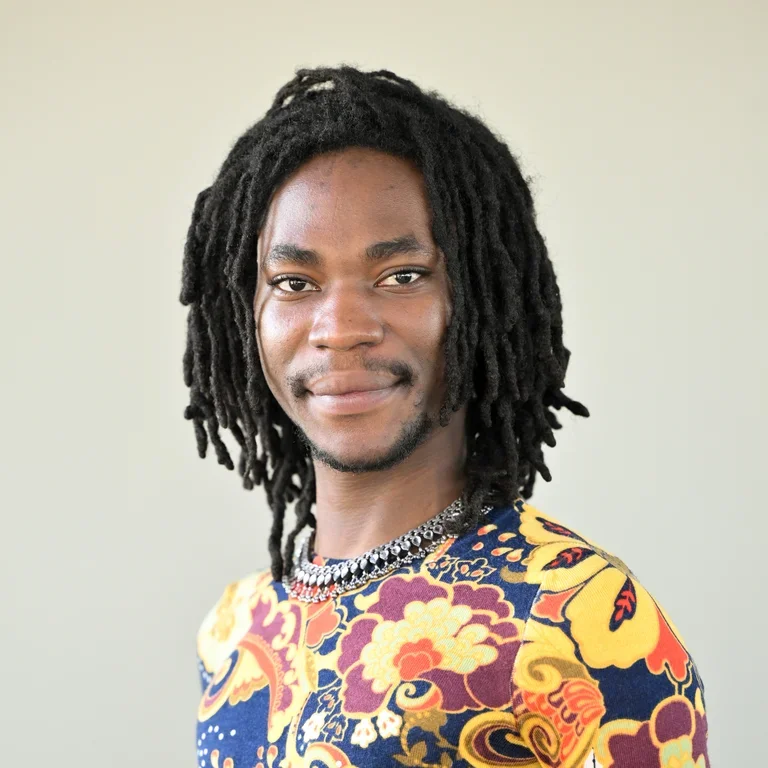
By Michael Jordan, Student in the M.S. in Sustainability Science Program, School of Professional Studies
As one of the most complex transit systems in the world, the New York City subway serves more than 1 billion riders each year. Yet, while millions rely on it daily, little attention is paid to the quality of the air that commuters breathe underground. During the spring 2025 capstone workshop course, under the direction of faculty advisor Benjamin Bostick, I joined fellow M.S. in Sustainability Science (SUSCI) students Norah Aljuryyed, Sarah Brown, Albino Ferreras, Elaine Hamontree, Pragya Jain, Ruihong (Renee) Li, Ade Olua, Barry Seng, Sarah Shapiro, Janany (Jay) Subra, and Adrian Wilson to examine this issue more closely. Together, we analyzed PM2.5 (particulate matter with a diameter of 2.5 micrometers or less) levels across subway platforms and train cars to gain insight into exposure risks and identify possible mitigation strategies.
Through data analysis, modeling, and interdisciplinary collaboration, our findings reveal rapid fluctuations in subway air quality in response to train movement and airflow patterns. Simple yet practical interventions in filtration and ventilation could play a vital role in providing cleaner air for millions of riders. I recently reconnected with some of my capstone team to talk about our research, key takeaways, and how the experience shaped our perspectives.
In what ways did this capstone align with your career path or aspirations?
Our team investigated and analyzed PM2.5 levels within New York City’s subway system to provide data and preliminary recommendations to address the associated public health risks. Although my career has centered on food security and ensuring equitable access to nutritious food, I saw this project as an opportunity to explore how environmental health contributes to public well-being. Viewed through this lens, air quality, like food access, is a key component of community health. This project contributed a valuable perspective on the interconnected nature of sustainability—from the food we eat to the air we breathe.
—Adrian Wilson, ’25SPS, Sustainability Science

What did you learn about the air quality in the subway?
Our findings indicate that the air quality in the New York City subway system is hyperlocal and changes rapidly. PM2.5 levels on subway platforms and inside train cars can routinely swing by an order of magnitude within a matter of minutes. Our data suggests that trains can act like giant pistons, pulling polluted tunnel air onto platforms as they arrive and flushing it away as they leave.
At one 86th Street station, we found that the dirtiest air consistently entered from the lower south tunnel, confirming the tunnel as a principal source of particulate matter. Deeper stations or stations with limited ventilation had the highest PM2.5 concentrations, while stairwells and vents open to street level allowed cleaner air to circulate. Inside train cars, doors are the main entry point for air pollution. Every time the doors opened, PM2.5 levels spiked. When the doors closed, the train’s ventilation system typically halved PM2.5 concentrations within three minutes if the filters were clean. However, train cars with clogged filters or minimal recirculation trapped pollution instead.
Our projection model revealed that boosting filter efficiency would reduce PM2.5 levels in train cars. On platforms, strategies such as adding direct ventilation to the lower level or synchronizing train arrivals to generate stronger piston winds were shown to markedly improve air quality. Conversely, the model showed that installing platform screen doors often worsened air quality unless they were paired with fresh-air ventilation. Overall, these findings taught me that subway air quality is highly dynamic and that, while there’s no one-size-fits-all fix, targeted improvements in ventilation and filtration can provide both short- and long-term benefits for commuters’ health.
—Ruihong Li, ’25SPS, Sustainability Science
How had other courses in SUSCI prepared you for the capstone?
One of the requirements for the capstone workshop is to complete at least one course in each of the core curricular areas. From the start, I planned to focus on programming and modeling-related courses, such as SUSC PS5060: Statistics, Data Analysis, and Coding and SUSC PS5050: Geographic Information Systems (GIS) for Sustainability Science, because I knew these skills would be crucial for managing and interpreting data for an applied project like this one.
Our large team divided the work into specialized subgroups to tackle different parts of the project. I served on the modeling subgroup, where I found my data management skills to be essential. While I wasn’t responsible for the intensive coding in our modeling work, the way I organized and analyzed the data to tackle our core question was deeply informed by the skills and concepts I learned in earlier courses.
In addition, courses like SUSC PS5001: Fundamentals of Sustainability Science and SUSC PS5010: Climate Science for Decision Makers: Modeling, Analysis, and Applications provided valuable context. They broadened my perspective on New York City’s sustainability challenges—like poor air quality in train cars—and motivated me to think critically and apply data-driven approaches to solve them.
—Ade Olua, ’25SPS, Sustainability Science

In what ways did collaborating with such a diverse team enhance the project’s outcomes, and what challenges did you have to navigate along the way?
People from this group came with a wide range of skills and backgrounds. Some had engineering or computer science backgrounds and contributed technical skills that helped us build a detailed predictive model. Others had strong leadership skills that helped keep the team organized and focused, while others had writing and storytelling skills that helped us create a clear, cohesive paper. This project really showed me that solving sustainability challenges requires a variety of expertise and perspectives. Bringing people together with different backgrounds allowed us to discuss solutions and anticipate potential problems from multiple perspectives. Overall, I found the complexity within this academic space really interesting, and I believe that everyone can apply what we learned to their own fields in a meaningful way.
—Sarah Shapiro, ’26SPS, Sustainability Science
Looking ahead, there are many ways future capstones could build upon our work. Opportunities include characterizing the composition of particulate matter within the subway system, identifying optimal ventilation points for airflow, modeling the sources of pollutants, measuring health impacts across different age groups, or even expanding the current model to additional stations across the city. Our team laid a strong foundation for continued research on subway air quality by bringing together diverse skill sets, organizing into specialized subgroups, and producing a comprehensive report for our client. What began as a semester-long project has opened the door to a much larger conversation about how science and data can drive healthier, more sustainable urban transit systems. To learn more, you can read the capstone report here and watch the recorded presentation on YouTube.
Views and opinions expressed here are those of the authors and do not necessarily reflect the official position of Columbia University School of Professional Studies or Columbia University.
About the Program
The Columbia University M.S. in Sustainability Science program, offered by the School of Professional Studies in partnership with the Climate School, prepares students for management and leadership positions in which they help organizations address environmental impacts. Students learn strategies to respond to the ever-changing environment and predict future environmental changes—and the impact on corporations, not-for-profits, and the public.
Designed by research faculty at the Lamont-Doherty Earth Observatory in collaboration with Columbia’s Earth Institute, the program develops a new generation of scientific leaders through a cutting-edge curriculum led by the world’s top sustainability scientists, the majority of whom are Lamont research professors. Graduates are well prepared for management and leadership positions, armed with the scientific expertise to drive meaningful environmental change and lead organizations in a rapidly evolving sustainability landscape. With the flexibility to choose from a variety of courses, students can tailor their education to career goals, while New York City serves as a living laboratory for sustainability innovations and connects them with employers actively seeking program graduates.
Learn more about the program here.