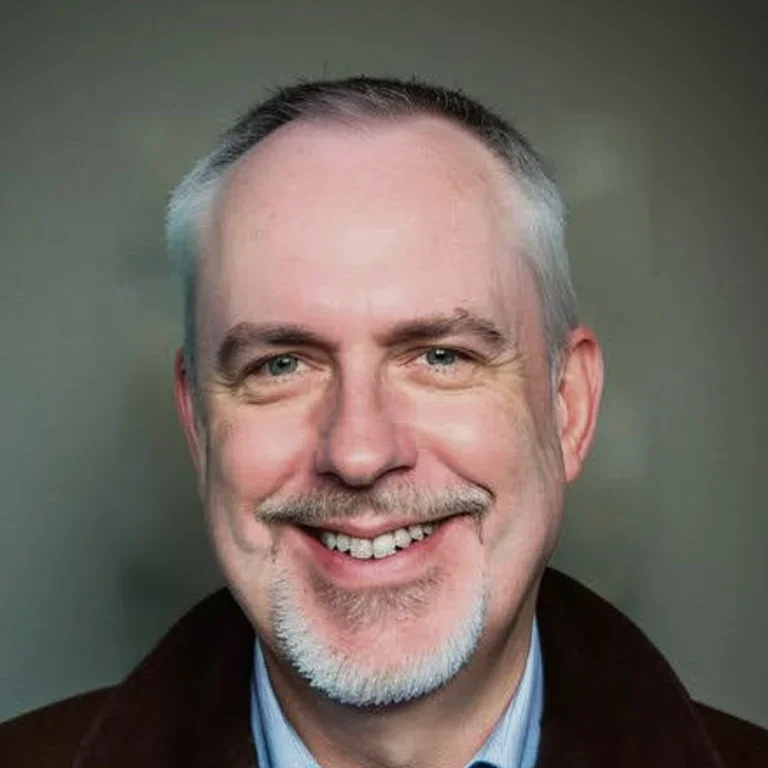
By Tom Watson, Lecturer, M.S. in Nonprofit Management, School of Professional Studies
At a recent information session for prospective M.S. in Nonprofit Management students, a participant asked a question that got to the heart of the massive challenges now facing our sector: How multidisciplinary is our degree program, and by extension, how did the Columbia panel view the definition of the philanthropic sector?
As we welcome new students this fall, I’ve been thinking about this exchange quite a bit. The nonprofit sector is facing vast uncertainty regarding the long-standing federal partnership with non-governmental organizations in healthcare, science, education, climate change, and the arts. The question made me reconsider the interconnectedness of it all, even as I work with consulting clients that are reeling from federal budget cuts and heightened threats to their work and nonprofit status.
In our coursework, we often stress the importance of strong partnerships and the cross-disciplinary nature of nonprofit work. Nonprofits rarely achieve social change alone. Our institutions are designed to work in collaboration with other organizations, as well as the public and private sectors. Many of the students I’ve had over the last decade have worked across sectors during their careers—some in government and many in the private industry, and still others consulting. In class discussions, it has become increasingly evident that bringing together individuals with a broad range of experiences and backgrounds is a real strength of our program at Columbia and is essential to the nonprofit sector in general. Measured against the current effort to upend our existing systems and this moment of political extremism in retribution, the “ties that bind” have been stretched to their capacity.
Like our students, our faculty members bring to the School an incredible variety of professional backgrounds. Nonprofit management is the most prominent, but our work also extends to government service, corporate careers, journalism, academia, the arts, and international engagement. In my view, this approach lends our response to the severe challenges of this moment (and the discussions they generate among students) greater resilience—we can collectively discuss broad and varied experiences that impact nonprofits not just internally, but across all of civil society.
That term—civil society—deserves greater definition, and a recent op-ed in the Chronicle of Philanthropy by Benjamin Soskis, senior research associate in the Center on Nonprofits and Philanthropy at the Urban Institute, poses a response.
“At a moment when standing up for civil society is more urgent than ever, the sector needs a better understanding of what it’s defending,” wrote Soskis. “No uniform definition of civil society exists. Most often, however, it refers to the spaces outside of government and business where individuals come together to promote or pursue their conception of the good. In the United States, civil society is dominated by the tax-exempt nonprofit sector, but the term also encompasses religious organizations, labor unions and trade associations, the media, social movements, and informal groups.”
That seems right, and I agree with his assessment that the term can be a powerful one that links varied institutions together against extremist policies. Soskis also asserted that “another way to understand civil society is through a set of values that define it—pluralism, independence, and a commitment to civic engagement and social connection.” These are the key underpinnings of our master's program curriculum, regardless of what new systemic challenges arise each day.
How do we defend institutions in this populist era? Can we stand up for “the establishment” and organized philanthropy, or does that seem both out of touch and elitist? And what can we tell our students this fall? Here are three ideas:
- We must publicly acknowledge that our sector is now under significant stress and will remain so for the foreseeable future. There is no magic eraser. It’s our ethical imperative to speak up and to reach out to other leaders across U.S. civil society, to gather together more often, and to support each other in a unified response to the existential threat.
- The other side of that coin is the realization that nonprofits rarely achieve change alone—we have always worked in partnership with other organizations, funders, government actors, and businesses. As SPS Senior Vice Dean Steven Cohen wrote recently on his blog: “We are better when we act as a coherent community—when all levels of government work as a team in productive partnership with private for-profit and not-for-profit organizations.”
- Equipping our students with knowledge, experience, and leadership skills will help them to proceed with courage and confidence—two qualities they will need in abundance in the years to come.
The postwar civil society structure of the United States has advanced imperfectly but relentlessly toward a greater degree of fairness and opportunity; it is a story of grave both missteps and broad social victories, and many shades of gray. Yet as we head into the fall of what is only the first year of this existential crisis, it’s worth recognizing that we all have work to do.
Views and opinions expressed here are those of the authors, and do not necessarily reflect the official position of Columbia School of Professional Studies or Columbia University.
About the Program
Columbia University’s M.S. in Nonprofit Management prepares graduates for leadership roles within mission-driven organizations in a wide variety of contexts, including global and community nonprofits, foundations, education, healthcare, the arts, or as fundraising and development experts.
Learn more about the program here. The program is available part-time, full-time, on-campus, and online.