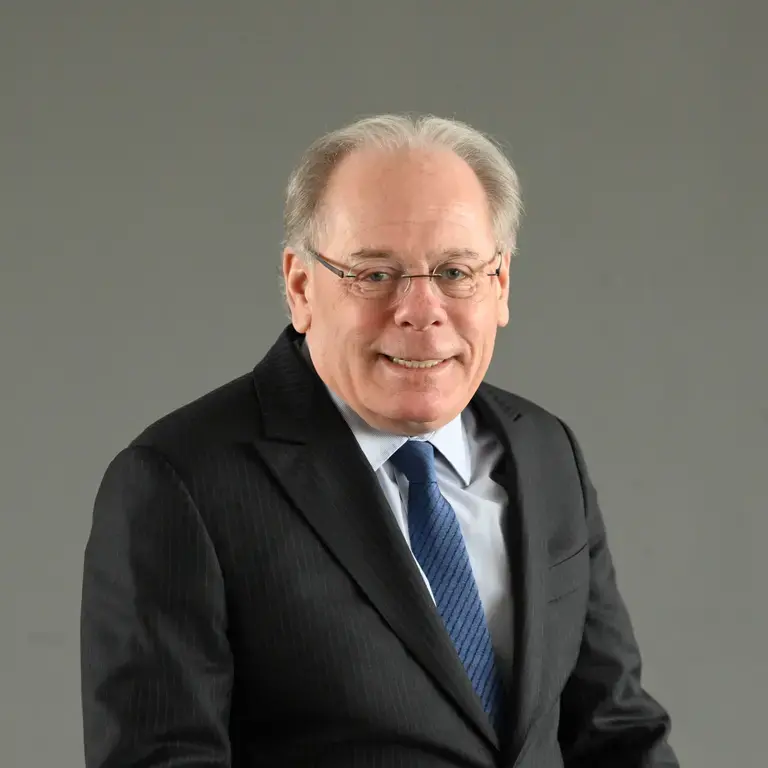
By Steven Cohen, Ph.D., Director of the M.S. in Sustainability Management program, School of Professional Studies
The Trump administration’s effort to dismantle efforts to decarbonize the economy, to promote fossil fuels, and to deconstruct the EPA’s science and regulatory programs might give the impression that the profession of environmental sustainability management is ending. Nothing could be further from the truth. The growth of sustainability management remains strong in the private sector, in U.S. local governments, and outside the United States. The growth is partially in response to increased environmental regulation outside the U.S. federal government, but also due to the development of sustainability as a fundamental management practice. Organizations are focused on energy supply and efficiency, waste management, environmental impacts, and relations with their surrounding community. Effective resource management and community relations can lower costs and increase profits.
We are in a brain-based, design- and service-oriented global economy, despite the efforts of some ideologues to return to a brawn-based, America-only, manufacturing economy. The manufacturing world is now largely global with highly specialized supply chains and is increasingly automated. Its share of the United States’ GDP is low and shrinking, and manufacturing is increasingly brain- rather than brawn-based. A brain-based economy depends on educated and well-trained staff, along with management and governance that is populated by people with a diversity of lived experiences. And while it’s true that some DEI efforts became exercises in establishing demographic quotas, more sophisticated human resource systems focused on inclusion rather than exclusion and avoided quotas as a methodology of achieving diversity. To succeed, modern organizations must pay attention to their use of natural resources, their impact on their neighbors and on the planet, and their treatment of their own human resources. This is the sophisticated, mindful management that attracts investors. To achieve these goals, well-managed organizations are hiring growing numbers of sustainability professionals.
Sustainability is not simply motivated by regulation but by investors increasingly concerned about climate and environmental risk. This is not ESG investment funds claiming to drive capital toward green businesses, but standard investor assessment of risk on a more crowded, resource-strained, and warming planet. In the view of investors: If an organization is not managing its environmental risk, what other risks is it ignoring? Why invest my capital in a company that does not take environmental risk seriously? This demand by investors is changing the nature of the sustainability profession. Originally mission-driven and idealistic, it is becoming more pragmatic and profit-oriented. This is a reaction to the same objective environmental conditions that the American national government would like to avoid knowing about. President Trump may believe he can change economic conditions by firing the government’s chief statistician and denying the climate crisis by defunding research, but everyone else needs to deal with reality and conditions on the ground.
John Davies, author of The Trellis report entitled “The State of the Sustainability Profession 2024,” notes the rapid change in the profession as regulatory requirements for climate disclosure grow. Even as the United States federal government retreats from these requirements, European, state, and investor demand for environmental risk data continues to grow. This has brought the sustainability profession into the center of corporate management. According to Davies:
“The playbook for the sustainability executive is still being written. Whether you’re new to sustainability or an industry veteran, the landscape is changing fast, requiring all of us to adapt as quickly as possible…General counsels and chief financial officers are becoming more involved as sustainability data now requires the same assurance as financial data. New roles, such as the ESG controller, are being created to ensure regulatory compliance. What once was an exercise in corporate good is now becoming table stakes. First published in 2010, the State of the Sustainability Profession looks at the evolution of the role of the sustainability leader in today’s business world. Among the key findings:
- The number of corporate sustainability workers, both full-time and freelance, has been rapidly increasing.
- Salaries for sustainability professionals have grown more than in any time since we started publishing this report 14 years ago.
- Sustainability executives are rising in seniority within their organizations.”
In New York and California, government efforts to transition to a green economy are increasing sustainability employment in government and government contractor jobs. New York City’s government is setting an example and is gradually decarbonizing its own buildings and vehicles. A graduate of Columbia’s MPA in Environmental Science and Policy program is managing the city’s effort, and his office has grown from 6 to about 60 staff over the past seven years. Even though decarbonization goals will probably be missed in New York State, a variety of initiatives, such as NYC’s Local Law 97, are gradually reducing greenhouse gas emissions from large buildings.
Sustainability reporting is now ubiquitous in the private sector. Martha Carter, Matt Filosa, and Diana Lee, of the Harvard Law School Forum on Corporate Governance, conducted a study of 250 sustainability reports from S & P top 500 companies. They learned that:
“The acronym “ESG” is down but certainly not out. The most common key word in 2024 report titles was “Sustainability” (39%), overtaking last year’s leader “ESG” (24%, down from 35% in 2023)…. CEOs are increasingly accountable for ESG strategies. CEOs were noted as ultimately responsible for company ESG strategies 32% of the time – almost double the amount in 2023 (18%). Like last year, CEOs signed a supermajority of 2024 Sustainability Report cover letters with other executives (e.g., Chief Sustainability Officers) also signing cover letters about a quarter of the time… [DE]I will survive. Despite current challenges to these efforts, 94% of companies continued to use the term “DEI” in some form within their ESG reports, a very modest decrease from last year. Among those that adjusted their disclosure practices, most opted to restructure their sections to focus more broadly on themes of belonging and inclusion, rather than removing the DEI section entirely…Sustainability reports are being issued with less pomp but with more circumstance. The number of companies issuing press releases with 2024 Sustainability Reports was down significantly (49%) from when we first started tracking this in 2021 (75%). However, ESG microsites are ubiquitous, providing stakeholders with a variety of opportunities to interact with a company’s ESG initiatives.”
All of this is an indication that sustainability management is being integrated into routine corporate management. The sustainability profession is evolving, and Columbia’s master’s program in Sustainability Management is changing as the profession changes. Our program has grown from about 15 classes when we launched in 2010-11 to over 80 classes today. Our student body has grown from about 100 to nearly 500 students today. The field has become so complex that last spring our student government (SUMASA) asked the faculty to provide more advising and direction as they try to navigate their choices among those 80 courses and identify the key skills they need to succeed in the wide variety of career paths emerging in our field.
In response, we have developed an open (zero credit, no tuition, no assignments) workshop course that we will hold on nine Tuesday evenings this fall from 8:10-9:30 PM. It will be in-person on the Columbia campus with Sustainability Management faculty serving as moderators with panels of alumni. Some of our alumni panelists will be in the room, and others will appear on Zoom. In addition, the course will be streamed and open to anyone interested. Students and guests can attend one session, a few, or all of them—depending on their areas of interest. You need not register for the course to attend either in person or online. The course will be coordinated by the Sustainability Management program's Assistant Director of Student Affairs, Cindy Ip. The faculty and alumni will discuss the way the field is changing and which courses in our curriculum are most relevant to their areas of practice. I also suspect they will identify new courses that we will need to develop.
I will moderate a discussion of governmental sustainability, decarbonization, and environmental protection. Dong Guo will moderate a discussion of international sustainability careers, Lynnette Widder will lead a discussion on the built environment, and Travis Bradford will discuss energy consulting and related fields. We will also have discussions on nonprofit and advocacy opportunities and on sustainability analytics. The first few sessions are already scheduled, and they include: corporate sustainability moderated by Vance Merolla on September 16th, sustainability finance moderated by Bruce Kahn on September 30th, and environmental justice moderated by John Williams on October 7th. This will be an exciting learning experience for our students and our faculty. Prospective students will learn about our program’s cutting-edge curriculum, incredible alumni, and wonderful faculty.
In addition to this workshop course, we are also sponsoring a major event on “Next-Gen Sustainability: Skills for What’s Next” featuring Professor Satyajit Bose, who will moderate a discussion on Wednesday, September 24, 2025, in the Pulitzer Room of Columbia’s Journalism School. Professor Bose will moderate a discussion with:
- James Ossman, a Columbia alum who is a Vice President of Customer Operations at Etsy, where he oversees Customer Support, Trust and Safety, and international business. He also serves on the Sustainability Management Program’s Advisory Board.
- Curtis Probst, a Columbia alum who is CEO of New York City Energy Efficiency Corporation, a public-private-philanthropic partnership that finances energy efficiency and clean energy projects in the Northeast and Mid-Atlantic regions. Curtis also serves on the Sustainability Management Advisory Board.
- Celine Ruben-Salama, a Columbia alum who is the Founder and Principal of FOR THE LONG-TERM, LLC, a corporate sustainability consultancy.
- Zachary Suttile, a Columbia alum who is a Director in E3’s Climate Pathways and Electrification practice, where his work covers all sectors of the energy economy to evaluate the potential and impact of climate solutions.
The profession of sustainability management is evolving and growing. Here at Columbia, we are working hard to maintain our understanding of the field as it changes and becomes ever more important. This fall, we will be deeply engaged in a set of activities to teach us about our field’s trajectory and ensure that our curriculum continues to evolve with the industry. You are welcome to join us for these activities on campus or online. If you are searching for a sustainability master’s program, we invite you to register for our online information session on August 11th at 12:00 PM ET. Information about our accomplished faculty can be found on the M.S. in Sustainability Management website. Additionally, applications for our January start are now open. Our goal is to build the profession of sustainability management, and we are eager to admit talented and dedicated students to Columbia’s environmental policy and sustainability management programs.
Views and opinions expressed here are those of the authors, and do not necessarily reflect the official position of Columbia School of Professional Studies or Columbia University.
About the Program
The Columbia University M.S. in Sustainability Management program offered by the School of Professional Studies in partnership with the Climate School provides students cutting-edge policy and management tools they can use to help public and private organizations and governments address environmental impacts and risks, pollution control, and remediation to achieve sustainability. The program is customized for working professionals and is offered as both a full- and part-time course of study.