
Gustavo Hunter has spent much of his career helping Chile navigate the transition to electric transportation. From developing national electromobility policies to leading sustainable mobility initiatives for the country’s automotive industry, he has worked across government and the private sector to help shape the future of transportation in his home country.
Now, as a recipient of the 2026–2027 Luksic Scholarship for Sustainability, Hunter is bringing that experience to Columbia University’s M.S. in Sustainability Management (SUMA) program, where he hopes to develop the financial, economic, and management expertise needed to address the next generation of sustainability challenges.
For Hunter, the decision to pursue another graduate degree reflects an important realization: advancing electric mobility requires more than engineering expertise and effective public policy. It also demands a deeper understanding of how sustainable solutions can be financed, implemented, and managed over the long term.
His goal is to return to Chile and apply what he learns at Columbia to help accelerate the country’s transition to cleaner transportation.
“In Chile, 22% to 24% of CO2 emissions come from transportation,” Hunter said. “So public policy is trying to decrease the amount of CO2 from the transportation sector, and electromobility is one of the most important pillars of achieving that goal.”
Building a Career at the Intersection of Engineering and Public Policy
Born and raised in Concepción, one of Chile's largest cities, Hunter earned a master’s degree in electrical engineering from the University of Concepción in 2016. He began his career as a technician working on solar power plants, gaining firsthand experience with renewable energy technologies.
After two years, he realized that he wanted to move beyond the technical aspects of clean energy and contribute to the public policies shaping its adoption.
That interest led him to Chile’s Superintendence of Electricity and Fuels, a public agency under the Ministry of Energy, where he became head of the electromobility department.
“It was the early days of electromobility and I was the head of the electromobility department,” Hunter said.
As electric vehicles began appearing on Chilean roads in greater numbers, his department worked to establish the regulations needed to support their adoption, including the growing use of electric buses in Santiago.
The work placed Hunter at the intersection of technology, government, and industry. He collaborated with stakeholders across the transportation sector, including companies developing electric buses, trucks, and passenger vehicles, while also contributing to Chile’s first national electromobility strategy.
The experience gave him an understanding of how public policy can support technological change, as well as the challenges involved in translating national sustainability goals into practical solutions.
In 2023, Hunter brought that perspective to the private sector when he joined the National Automotive Association of Chile (ANAC), the principal trade organization representing the country’s automotive industry, to lead its newly established sustainable mobility department.
At ANAC, he works with automotive companies and government officials to build consensus around emerging regulations and help the industry prepare for new policies. He has also contributed to subsequent iterations of Chile’s national electromobility strategy.
“I am one of the policy leaders here in Chile on electromobility technology,” he explained.
Having worked on both sides of the policy process, Hunter understands the importance of collaboration between government and industry in advancing sustainable transportation.
His experience has also given him a perspective on why electric mobility matters for Chile’s economic and environmental future.
According to Hunter, Chile imports approximately 99% of its fuel, while possessing substantial reserves of copper and lithium, two materials essential to electric vehicles and batteries.
For a country seeking to reduce transportation emissions while making greater use of its natural resources, the transition to electric mobility presents significant opportunities and complex challenges.
Why Columbia, and Why Now?
Despite his experience in engineering, public policy, and sustainable transportation, Hunter recognized that there were important dimensions of sustainability that he wanted to understand more deeply.
About three years ago, he began considering a return to graduate school.
He was particularly interested in expanding his knowledge of sustainability finance and economics, areas that would complement his technical background and help him approach transportation challenges from a broader management perspective.
Columbia’s Sustainability Management program quickly emerged as a leading choice because of its global reputation and interdisciplinary approach.
For Hunter, the opportunity to study sustainability through the lenses of policy, management, and economics offered a way to build on his professional experience while developing new expertise.
He applied to Columbia and was accepted into the program. He was subsequently selected as one of two recipients of the 2026–2027 Luksic Scholarship for Sustainability, alongside fellow student Francisco Loyola.
The scholarship, which provides full tuition and living expense support for students from Chile pursuing the M.S. in Sustainability Management at Columbia University’s School of Professional Studies, removed a critical financial barrier to his education.
“I was really astonished to receive this award,” Hunter said. “And I am anxious to start my journey in New York.”
The scholarship provides Hunter with an opportunity to pursue an education that he intends to put to work in his home country, building on his existing experience while preparing to address new challenges in sustainable transportation.
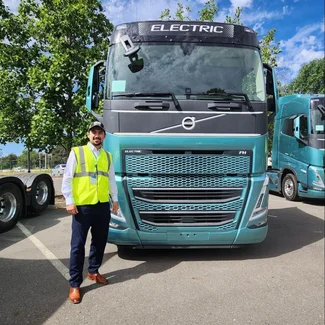
Gustavo Hunter has spent much of his career helping Chile navigate the transition to electric transportation. From developing national electromobility policies to leading sustainable mobility initiatives for the country’s automotive industry, he has worked across government and the private sector to help shape the future of transportation in his home country.
Preparing for the Next Generation of Sustainability Challenges
One of the issues Hunter is particularly interested in exploring at Columbia is the circular economy for electric vehicles.
As electric transportation becomes more widespread, questions about what happens to vehicles and batteries at the end of their useful lives will become increasingly important.
For Hunter, understanding how to manage those materials, develop sustainable business models, and address the economic implications of vehicle disposal and recycling is essential to the long-term success of electric mobility.
“I think that will be one of the most important challenges in Chile — what will happen with all these electric cars when they are discarded,” Hunter said.
He hopes to use his time at Columbia to examine these questions while learning from faculty and fellow students with experience across different industries, disciplines, and countries.
“But I also want to learn about what is happening in the United States in the field of sustainability right now and discuss that with my peers from other parts of the world,” he said.
The opportunity to exchange ideas with an international community is particularly meaningful for a professional whose work requires navigating the interests of government, industry, and other stakeholders.
By bringing his experience in Chile to the classroom, Hunter also has the opportunity to contribute a perspective shaped by years of working on the practical challenges of implementing sustainable transportation policies.
His time at Columbia represents an opportunity not only to acquire new knowledge, but also to consider how approaches developed in different markets might inform the next phase of Chile’s energy transition.
Bringing His Columbia Education Back to Chile
Hunter has a clear vision for what comes after graduation.
He plans to return to Chile and resume his work at ANAC, applying what he learns at Columbia to strengthen the organization’s sustainable mobility initiatives and deepen its collaboration with government and industry.
“It’s a good place to be in Chile if you want to discuss these topics face-to-face with the government, with the Ministry of Energy, the Ministry of Transport and Telecommunications,” he explained.
His ambitions reflect the broader purpose behind his decision to pursue an education at Columbia: to build on a career already dedicated to advancing sustainable transportation and develop the expertise needed to address the challenges that lie ahead.
From his early work on solar power plants to helping shape national electromobility policies, Hunter has consistently sought opportunities to expand his contribution to Chile’s energy transition.
With the support of the Luksic Scholarship and the interdisciplinary education offered by the Sustainability Management program, he is preparing for the next chapter of that work.
For Hunter, the value of his education will extend beyond the classroom. He intends to bring what he learns at Columbia back to Chile, where his experience, relationships, and new expertise can help inform the country’s continuing transition to a more sustainable transportation system.
About the Program
Columbia University’s M.S. in Sustainability Management program, offered by the School of Professional Studies in partnership with the Climate School, equips students with the policy, management, and analytical tools needed to address complex sustainability challenges across the public and private sectors.
Designed for both emerging and experienced professionals, the interdisciplinary program combines academic expertise with practical applications in areas including sustainability strategy, environmental policy, economics, and organizational management.
With full-time and part-time study options, students can tailor their education to their professional goals while learning from Columbia faculty, industry practitioners, and a diverse community of peers.
Learn more about the M.S. in Sustainability Management program.


