What would financial institutions and businesses want biodiversity and nature data analysts for?
Earlier this year, the United Nations Environment Programme (UNEP) Finance Initiative published a report, Nature-based risk assessment: Integrating project-related finance. The 74-page paper highlights various nature-related risks for financial institutions, including damages caused by businesses to nature (risk from impact) and the cost of nature loss on business (risk from dependencies)—both of which create myriad burdens for institutions.
According to the report, financial impacts of nature degradation are on track to become monumental, causing an estimated 12 percent loss to the UK’s GDP by the 2030s and a cost of “upwards of USD 5 trillion” to the global economy.
“Managing exposure to nature-based risks is not simply reputational or regulatory, it is essential to the long-term resilience of [financial institutions],” the report says.
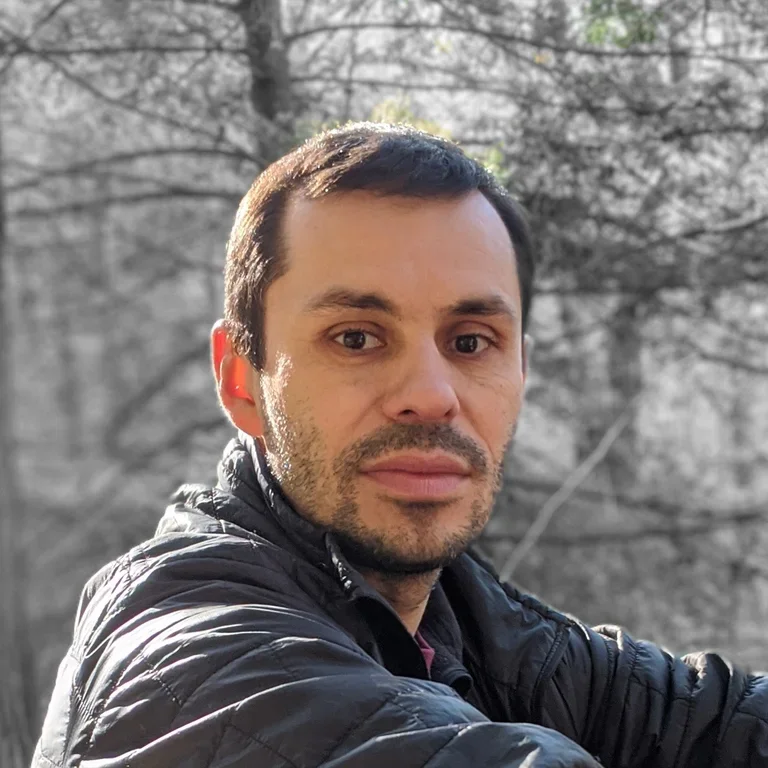
The new M.S. in Biodiversity Data Analytics program at Columbia University School of Professional Studies (SPS) prepares students to face the unique challenges stemming from biodiversity loss and nature-related risk. In an interview with SPS, Program Director Viorel Popescu discusses the specific skills students can expect to gain from the program.
What role can Biodiversity Data Analytics students play in addressing nature-based institutional risks, as highlighted by the UNEP report?
Translating nature risk to financial risk is indeed one of the missing links slowing down progress on fully integrating nature in finance and investment decisions. Our program takes a two-pronged approach to bridging this gap.
First, we are training professionals to be true translators and navigate the ecology/finance interface by taking roles in the exact sectors that the UNEP report has identified: consulting, auditing, nature data provider, internal analysts, and many others. They can act as the glue that strengthens teams composed of economists, auditors, risk assessors, and financial analysts by translating complex nature data to a language that other disciplines can easily understand and offering insights into the right data and metrics, analytical approaches, outputs, and outcomes that address both the risk from impact and from dependencies.
Second, Biodiversity Data Analytics students can be successful in these roles because of how the program is framing nature analytics. We are moving away from traditional ecology and simple nature metrics and concepts to “nature-to-value” pipelines and workflows relevant for finance and enterprise risk assessment. Our analytics courses place emphasis on detecting signals from data and identifying risk thresholds and intervention points. We are training our students to develop a sequential chain starting with ecological condition evaluation to impact and dependency assessment, risk quantification, disclosure and target-setting, management response, and finally, performance verification.
The UNEP report also notes that a major challenge to carrying out a nature-based risk assessment is that nature-based risk is highly location-specific. Given how different the data and risks are depending on where this work is being done, how will BIDO students be prepared to address location-specific nature-related challenges beyond the classroom?
Biodiversity is inherently local, and so are the economic, social, and political conditions that affect the effectiveness of conservation actions. Thus, as part of developing pipelines and workflows, a common thread across all courses will be to identify the correct types of data and the scale of data that is the most relevant to the local condition and type of risk. For example, if the dependency risk is related to loss of pollination services for a critical crop in a specific region of the Amazon, then students will be able to evaluate whether existing data from public repositories are granular enough to develop sensitive and measurable metrics and what new data is needed to complement available global metrics (e.g., design monitoring programs to collect biological samples via environmental DNA, insect traps, bat bioacoustics, etc.).
The analytics toolset taught in the program will allow students to get hands-on experience with nature risk assessment via capstone projects with sponsor organizations focused on specific topics and locations and class group projects, but also via engagement in faculty research and optional field courses. For example, we are co-organizing a winter field course to Vietnam together with our colleagues in the M.S. in Sustainability Science program.
The Intergovernmental Science-Policy Platform on Biodiversity and Ecosystem Services' seminal report on the nature crisis in 2019 identified five main drivers of biodiversity loss: land/sea use change, direct exploitation, climate change, pollution, and invasive alien species. Can you discuss some of the various topics that BIDO students will cover that can be applied to these scenarios?
The first semester of our program sets the stage for addressing biodiversity loss with a core course in Conservation Biology taught by faculty in the Department of Ecology, Evolution and Environmental Biology at Columbia. This course teaches students to evaluate the effects of these multiple stressors, which often act synergistically, and challenges them to identify evidence-based solutions for reversing biodiversity loss. Biodiversity science and nature data are at the core of these solutions, and students will be able to apply analytical tools to various local and regional issues in an applied industry context. For example, students would use time series data to evaluate tipping points for a fisheries stock due to overexploitation and the effects on financial risk for fishermen, or use remote-sensing data to estimate anticipated habitat loss and fragmentation for species of concern from mining exploitation or cattle ranching operations. Most importantly, they will be able to understand the policy and financial levers that countries or communities can use to minimize impacts on the species, populations, and ecosystems of concern.
Beyond the technical analytics skills, what kinds of biodiversity-related topics will students learn?
Nature data analytics is only part of the story. Scientific evidence without an understanding of the policy and economic context and regulatory frameworks often falls short of achieving its intended impact.
Beyond framing the analytics courses in a nature-risk signals framework, our program provides students with complementary training that transposes analytics into management and financial decisions delivered by professionals in the field. The progression of courses lends itself wonderfully to integrating analytics with management, finance, and policy. A Nature Data for Management Decisions course offered at the same time as a second Advanced Biodiversity Analytics course will seamlessly integrate data into industry-relevant decisions (nature-to-value pipeline). Students will learn the "chain of evidence" and translate ecological signals into risk disclosures, management strategies, policy recommendations, and nature-positive commitments that are scientifically credible and actionable.
A follow-up course in Biodiversity Finance will elevate the outcomes of the analytics and decisions courses by integrating nature into capital markets, risk management, and disclosures. A complementary Conservation Policy course will provide the multi-level regulatory landscape that drives nature decisions and shapes nature risk disclosure and alignment (from international commitments to national, regional, and local).
You have spoken about the importance of getting the Biodiversity regulatory movement right and noted that we need to avoid the pitfalls that plagued efforts to address climate change. Can you elaborate on that? Where can we start, and how does the Biodiversity Data Analytics program help establish the groundwork for an effective movement?
There is an increased recognition from international agencies and nations that our solutions for addressing climate change and biodiversity loss must be implemented in tandem. This is not just a fad; it comes from real economic and social risks and costs incurred by organizations and countries. Droughts not only affect water availability for crops, but also drive declines of pollinators, soil microorganisms, and other free “laborers” that deliver ecosystem services that we take for granted. Droughts can fuel fires that lead to loss of resilience of forests and grasslands and affect their ability to support biodiversity and supply ecosystem services.
Thus, climate and nature cannot be decoupled for enterprise risk assessment and financial accounting, and the so-called climate-nature nexus requires solutions that address climate issues and biodiversity loss simultaneously. Nature climate solutions can be designed to have biodiversity co-benefits; carbon markets can be strengthened by layering or leveraging biodiversity considerations. There are encouraging signals from higher levels that this integration is necessary and ongoing; the Intergovernmental Panel on Climate Change (IPCC) and the Intergovernmental Science-Policy Platform for Biodiversity and Ecosystem Services (IPBES) have joined forces to chart a common path for sustainable climate-nature solutions, and the financial sector has a critical role to play by minimizing (or inverting) the ratio of nature-harmful to nature-protecting investment.
About the Program
The Master of Science in Biodiversity Data Analytics program at Columbia University equips a new generation of leaders with the data literacy, analytical tools, and interdisciplinary expertise to design evidence-based solutions that benefit both people and nature.
Designed for both working professionals and early-career changemakers, this online program allows students to learn from anywhere while gaining the skills to collect, analyze, and translate biodiversity data into meaningful action. Coursework prepares students to take on nature data applications across industries, from ESG finance to urban planning to environmental consulting, and culminates in a hands-on capstone with industry partners that provides practical experience, valuable networks, and the tools to make an immediate impact.