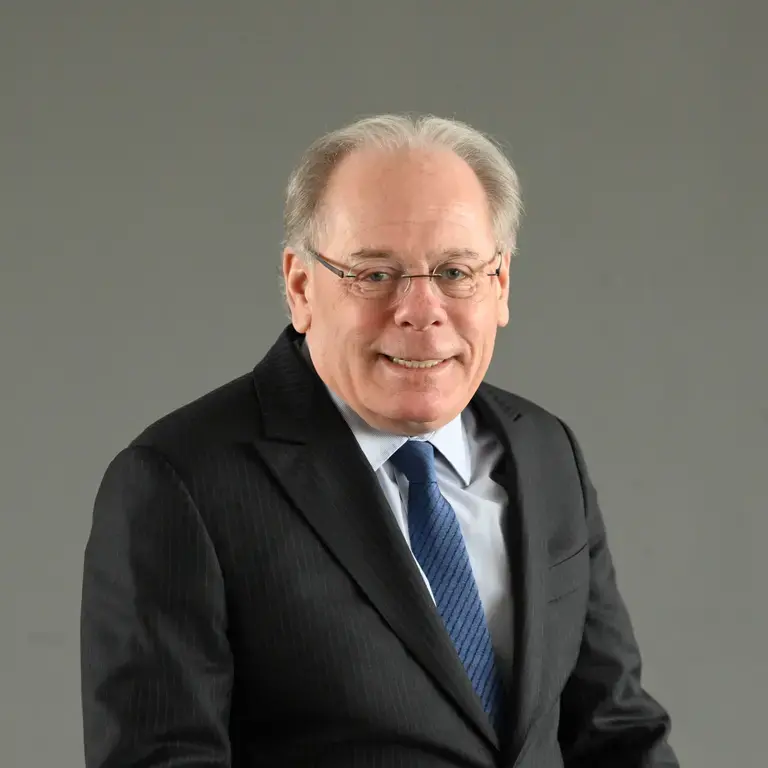
By Steven Cohen, Ph.D., Director of the M.S. in Sustainability Management program, School of Professional Studies
America is in danger of being transformed from a diverse, if imperfect, nation of immigrants to something I can barely recognize as America. In cities all over America, we see masked ICE agents terrify the public as they engage in performative media-seeking enforcement. Their goal is to frighten foreign-born people working hard for the better life of the American dream. Nearly all immigrants, regardless of their legal status, are honest and hardworking. The xenophobes must work hard to find any who are dishonest criminals. Our dysfunctional Congress has been unable to fix our broken immigration system, and when they came close to doing so, then-candidate Trump killed the compromise to keep the issue hot for his reelection campaign. Our immigration system is broken, but ending it won’t fix it.
I find myself wondering why our government wants to destroy our prosperity and way of life. I live in New York City, which is the world’s capital and the most international and dynamic city in the world. Walking in New York City is one of my favorite forms of recreation. This is a place that does not fit into any mold and is constantly changing and evolving. Except for the 1970s and a bit of the 1980s, I’ve always lived here. I enjoyed my time in Indiana, Buffalo, West Virginia, and Washington D.C., but I never left my New York state of mind. Like many, I am attracted to this city’s energy and resilience. I strongly believe that this city will somehow survive this attack on our way of life.
When I was growing up, New York City was losing population and in decline. Many predicted the city’s demise, but those doomsayers didn’t understand the fundamental appeal and strength of New York. In the 1960s and 1970s, we were painfully transitioning from a manufacturing economy to a service economy. But even in decline, young people came here to create new kinds of music, art, and commerce, and our abandoned factories became lofts, studios, and places where the city’s ability to attract energy and creativity continued and grew. That is New York’s magic—its ability to attract and build on the hard work of newcomers. According to the NYC Mayor’s Office of Immigrant Affairs:
“The vast majority of immigrants have been in the United States long enough to establish roots in their communities. Almost 89% of foreign-born New Yorkers have been in the U.S. for more than five years. More than half have been in the country for more than twenty years. Whether they’ve been in the United States for three days or thirty years, immigrants are valued members of the New York City community… Nearly 38% of the resident population in New York City is foreign-born. The foreign-born population includes individuals who have naturalized (become a US citizen) and those who have not. Both population groups are significant, but naturalized citizens make up a larger share of the foreign-born population than non-citizens.”
Even though I was born and raised in the New York Megalopolis, all four of my grandparents were immigrants, coming here a little over a century ago. Chased out of Europe, they found opportunity and safety here. It is not simply that people come here and stay here; New York City has often been a gateway city for people who get their start in New York but then settle in another part of the country. Go to any large American city and you will find people who got their start in New York. New York City lost about 80,000 people to other parts of the country in 2024, but the city’s appeal remains. According to Alex Fitzpatrick of Axios:
“New York City; Washington, D.C., and Dallas are the hottest destinations for college-educated Americans leaving their home county, per the latest census data. Why it matters: White-collar workers tend to go where they think the jobs are, and cities are constantly competing with one another to attract well-paid professionals — and the tax revenue they often bring. By the numbers: Among Americans age 25 and up with a bachelor's degree or better who moved to a new county in 2023, 6.1% went to NYC, 3.5% to D.C., and 3.2% to Dallas…The bottom line: The time-old tale of New York being a big draw for white-collar workers holds true as ever, but plenty of other cities are getting a piece of the action, too.”
The dynamism of New York City is global, and many Americans are attracted to the city’s global diversity. Almost half of New York City’s residents speak a language other than English at home. New York attracts people from all over the world because somewhere in the five boroughs, they will find people from the place they were raised, whether it’s Texas or Tanzania. They will also find a mass transit system that enables them to get to work, 24 hours a day, without a driver’s license or automobile.
Despite the political rhetoric of “America’s decline” and the supposed danger of living in American cities, this country remains the wealthiest place on the planet, and the New York metro region has the largest economy in the United States. New York is also one of the safest big cities in America, with the most professional police force in the world. Its wealth is built on hard work, creativity, and the ability to attract and, yes, absorb, people from all over the nation and all over the world. This diversity is a strength that persists in the face of the most xenophobic administration in memory. The attack on DEI is an attack on the very culture that has made the United States the most powerful country in the world. I understand that in the effort to remedy past injustice, we managed to create new injustice. A correction was called for, but not the elimination of the goal of diversity itself. Diversity is America’s secret sauce, and nowhere is it more important than here in New York City. In 2023, I wrote a piece entitled “Diversity as a Value and the Economic Value of Diversity”. At that time, I wrote:
“In the late 1960s, I grew up in Brooklyn and was a high school student rights advocate protesting for racial integration of New York City’s schools and opposing the war in Vietnam. At one point, I was the head of something we called the James Madison High School Coalition to End the War. We didn’t end the war, and we certainly didn’t end racism, but I’m sometimes comforted by Dr. King’s oratory that “the arc of the moral universe is long but bends toward justice.” I take that long view, and while I see a culture bending toward tolerance, one would be foolish to ignore the hate speech, racism, antisemitism, homophobia, and xenophobia present in our country and legitimized by social media. This hate has always been out there, but the past decade has seen it come out from under the rock it used to hide beneath…To me, diversity is an ethical and, indeed, moral value. It is a principle that I deeply believe in. We learn so much when we engage with each other and share our different cultures and life experiences…New York City’s resilience and great economic strength are directly derived from its diverse people and communities. People come here from all over America and all over the world, knowing they will find other people from home who got here before they did. It can get contentious, and all is not peace and love, but it is remarkable in how it works and thrives. I find it thrilling when I learn about different cultures, histories, foods, and art, and never take the amazing complexity of human communities for granted. The energy of New York pulsates from its people and its diverse friendships, workplaces, and relationships. This engagement is positive, productive, and worth preserving and protecting.
A unique characteristic of this country is that after a short period of time, an immigrant can become an American. In most other parts of the world, you can never be seen as anything but a foreigner. In his final speech as President, Ronald Reagan made this very point:
“Since this is the last speech that I will give as President, I think it's fitting to leave one final thought, an observation about a country which I love. It was stated best in a letter I received not long ago. A man wrote me and said: “You can go to live in France, but you cannot become a Frenchman. You can go to live in Germany or Turkey or Japan, but you cannot become a German, a Turk, or a Japanese. But anyone, from any corner of the Earth, can come to live in America and become an American.”'…This, I believe, is one of the most important sources of America's greatness. We lead the world because, unique among nations, we draw our people -- our strength -- from every country and every corner of the world. And by doing so we continuously renew and enrich our nation. While other countries cling to the stale past, here in America, we breathe life into dreams. We create the future, and the world follows us into tomorrow. Thanks to each wave of new arrivals to this land of opportunity, we're a nation forever young, forever bursting with energy and new ideas, and always on the cutting edge, always leading the world to the next frontier. This quality is vital to our future as a nation. If we ever closed the door to new Americans, our leadership in the world would soon be lost.”
This drive to eliminate diversity and immigration is an attack on America itself. The effort to demonize immigrants as criminals and people who eat their neighbors’ pets is an attack on the very forces that have brought about America’s power and wealth. I do not believe that the federal government will succeed in ending New York City’s role as the global capital. The diverse and global economic, cultural, and political life of this city is too strong and entrenched to be displaced by masked enforcers. My hope is that the unpopularity of these aggressive displays of enforcement will compel the administration to focus their attention on other matters. Perhaps they could rediscover the conservative tradition expressed with such beauty by Ronald Reagan as he departed the Presidency.
Views and opinions expressed here are those of the authors, and do not necessarily reflect the official position of Columbia School of Professional Studies or Columbia University.
About the Program
The Columbia University M.S. in Sustainability Management program offered by the School of Professional Studies in partnership with the Climate School provides students cutting-edge policy and management tools they can use to help public and private organizations and governments address environmental impacts and risks, pollution control, and remediation to achieve sustainability. The program is customized for working professionals and is offered as both a full- and part-time course of study.