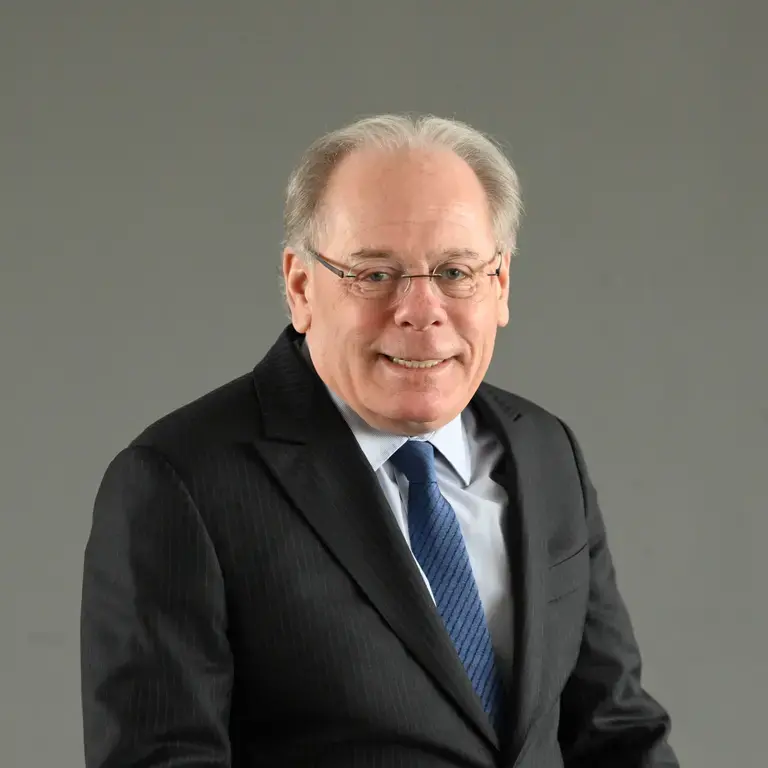
By Steven Cohen, Ph.D., Director of the M.S. in Sustainability Management program, School of Professional Studies
During a recent visit to Israel to see my family, I took time to meet with Ram Fishman and his colleagues at Tel Aviv University. Ram is a graduate of Columbia’s Sustainable Development Ph.D. program—a path-breaking interdisciplinary program led by faculty in the School of International and Public Affairs (SIPA). He is now helping to lead Tel Aviv’s New Environmental School, an effort to build interdisciplinary undergraduate and graduate programs in environmental studies.
Our conversation was about plans for their new school, but it quickly became a wide-ranging discussion about how we educate environmental professionals—and how much that design has changed over time. Since returning to New York, I’ve found myself reflecting on how my own views have evolved since I first designed a concentration in environmental policy at SIPA back in 1987.
My core takeaway is simple: environmental professional education has moved from relatively fixed, faculty-owned curricula toward more adaptive program designs—designs that still insist on conceptual depth, but that also prioritize scientific literacy for non-scientists, applied practice, and the flexibility to keep pace with a rapidly evolving field.
From faculty-owned curricula to professional realities
When I first began building environmental curricula inside a professional school, my working model was straightforward: a group of faculty would brainstorm the elements of a curriculum that would make graduates effective professional problem-solvers. We would design courses based on our academic expertise and our best sense of what professionals needed. If students found the curriculum compelling, they applied. In that model, faculty “owned” the curriculum, and there was no single “correct” way to design professional education—students could search for programs from many schools until they found one that matched their needs.
That approach wasn’t wrong. But over time, I came to see a limitation: academic rigor can easily become confused with academic control—especially when the default assumption is that more required courses automatically mean better education. Required courses tend to mirror the faculty’s expertise. The result can resemble a kind of interest-group politics, where curriculum requirements reflect internal power as much as professional necessity. In many cases, tenure-track faculty are selected to fill gaps in areas of research regardless of how important that research is to curriculum needs.
Professional education is different from doctoral education. It requires theory and concepts, but it also requires tangible, marketable skills—and it requires an honest understanding of what the work actually looks like outside the university.
A formative lesson: policy can’t ignore science
My conviction about scientific literacy in environmental education wasn’t abstract. It was shaped by experience. Early in my career, I worked in the EPA on the Superfund program. When the Superfund legislation was stalled in Congress, we planned for implementation anyway, mapping the steps we’d need to take to make the program operational once it passed: operational design, budgeting, organizational structure, and performance measurement.
But after the legislation passed, I remember learning that many of us in the policy formulation process had assumed a technical feasibility we did not truly understand. Scientists and engineers were clear that cleaning up a toxic waste site was not feasible. We simply do not know how to detoxify land. In many cases, the realistic options were containment, removal, and managing pathways of human exposure to toxics. We were incapable of a simple return to a pristine pre-industrial baseline.
That experience stuck with me because it exposed a basic professional hazard: environmentalpolicy professionals can make sweeping commitments while knowing far too little about the physical systems those commitments depend on.
When it came time to develop SIPA’s environmental policy concentration, I was convinced that environmental policy could not be taught well without environmental science—especially for students coming from non-scientific backgrounds. A required course in environmental science for policy makers was developed and taught by prominent scientists from Columbia’s Lamont-Doherty Earth Observatory. The course was designed explicitly for non-scientists who were being trained for leadership roles in the public sector. It introduced foundational material in environmental science and built our students’ ability to understand when they needed to seek out scientific expertise. We then paired that scientific foundation with courses in environmental economics, environmental politics, and international environmental law and policy.
To this day, I remain surprised that many environmental policy concentrations in public policy schools still treat environmental science as optional rather than foundational.
Building depth: an environmental MPA with a “Summer of Science”
In 2002, we doubled down on the science-policy connection by developing an all-environmental MPA in Environmental Science and Policy at SIPA. In that program, we created what we called “The Summer of Science”—a 12-credit sequence that expanded the single environmental science course into six focused two-credit courses in environmental chemistry, hydrology, toxicology, general ecology, urban ecology and climate science.
The design principle was consistent: world-class science, taught for non-scientists, in a way that supported policy and management decision-making.
We combined that scientific foundation with an MPA core curriculum, but we tried to ensure that the program didn’t treat “environment” as a niche specialization sitting on top of generic public policy studies. Instead, case studies and examples across the core were environmental. When we taught public finance, we financed a sewage treatment plant rather than a school building. When we taught management, the cases were environmental. The goal was not just exposure to environmental issues, but fluency in using environmental context, constraints, and data in professional analysis. In addition, we developed a three-semester integrative workshop sequence for the MPA in Environmental Science and Policy. In the summer and fall semester, we took an environmental bill that had been proposed but not enacted. In the summer, we delved into the science of the environmental problem and proposed a solution central to the statute. Our focus was on science communication to organizational decision makers. In the fall semester, we assumed the bill had been passed and developed a detailed plan for its start-up and implementation.
Over time, however, we began to learn a second lesson—one that pushed my thinking in a different direction. Science was central to environmental policy, but even a curriculum thoughtfully designed by academics can omit key areas that an evolving profession starts to demand. The more quickly the field changes, the more dangerous it is to assume that a faculty-designed set of requirements will remain optimal for long. In the MPA-ESP program at SIPA, that resulted in dropping four required courses and giving students four elective courses to enable them to shape their own program.
The pivot: designing a program that can evolve as the profession evolves
That realization became central when, in 2008 and 2009, I worked with colleagues from the Earth Institute to launch a Master of Science program in Sustainability Management. This program was designed to serve both full-time students and working professionals attending part-time. To ensure flexibility for part-time students, we decided the program would be offered in what was then called the School of Continuing Education and what is now called the School of Professional Studies. This school was built to accommodate part-time study.
We needed a curriculum that was rigorous—but also flexible enough to evolve alongside practice. And we needed a structure that could absorb new topics as they emerged, whether those topics came from shifts in policy, finance, technology, reporting frameworks, or the realities of organizational management.
Rather than relying on academic judgment alone, we designed the program so that experienced practitioners—often teaching as adjunct faculty—could play a meaningful role in identifying and teaching the knowledge and skills sustainability professionals actually need right now.
New York City helps. There are thousands of experienced sustainability professionals here, many eager to teach and share what they’ve learned. Of course, practitioner involvement is not a substitute for academic standards; it must be governed carefully. In our case, courses are reviewed through faculty curriculum processes to ensure quality and coherence. But practitioners have had a profound influence on how the curriculum has evolved. Additionally, at the School of Professional Studies, there is a robust teacher training program called the Career Design Lab that conducts formal training for instructors.
The result is a program that changes continuously. The courses we offered when we started in 2010 barely resemble the current offerings. That isn’t an accident—it is the design. The wide array of courses we offered this year are linked here:
Flexibility with guardrails
Flexibility is not the same thing as randomness. A program with many electives can fail if it produces graduates with fragmented knowledge and no shared foundation. It can also fail if inconsistent course quality undermines trust in the degree. For that reason, flexibility must come with guardrails. In the MS in Sustainability Management program, we built those guardrails in three ways:
1) A small number of required courses
We require only two courses:
- A survey course at the start of the program (Sustainability Management) that provides a common language and map of the field
- A faculty-led capstone at the end, consultant studies undertaken by teams of students for a government or nonprofit organization
Even though about 80% of our graduates go on to work in the private sector, we do not permit private-sector clients for the capstone. The reason is straightforward: students should not be paying tuition to provide free analytic services to profit-seeking companies. We reserve the capstone for government and nonprofit organizations, where high-quality policy and management analysis is often unaffordable—and where student work can directly advance the public interest. Students still engage extensively with the private sector through coursework taught by practitioners and through their careers, but the capstone itself is designed as a pro-bono public-service experience. In that sense, we are building on the principle of pro-bono service we’ve borrowed from our Law School colleagues. Students, however, can engage in volunteer group work for private clients through a student club called SUMANI, formed as a chapter of Net Impact.
2) Distribution requirements that ensure breadth across essential domains
In addition to the two required courses, students complete work across five fields of study:
- Integrative Sustainability Management (including the two required courses and one additional course)
- Economics and Quantitative Analysis (one economics course and one quantitative course)
- The Physical Dimensions of Sustainability (three courses addressing environmental science, energy, the built environment, food systems, fashion, and related physical systems)
- The Public Policy Environment (one course on law, policy, politics, or governance)
- General and Financial Management (two courses on sustainability finance and management practice)
The idea is to ensure that graduates can translate between physical systems, finance, institutions, and organizational decision-making—because sustainability work, at its core, requires the integration of many fields of knowledge.
3) Advising and governance to maintain coherence and quality
Students work closely with faculty advisors (and learn from alumni and peers) to align electives with career goals. Meanwhile, faculty governance provides quality control: practitioners can and should shape course content, but the program must still function as an integrated professional degree.
What environmental Sustainability professional programs must deliver now
Across the programs I’ve worked on—and across the evolution I’ve described—one theme stands out: Environmental Sustainability professionals need both depth and adaptability. Depth means conceptual and analytic capability: the ability to reason, evaluate evidence, and understand systems. Adaptability means the ability to acquire new tools, learn emerging frameworks, work across sectors, and apply knowledge in new contexts.
Academics sometimes undervalue tangible professional skills, treating them as intellectually inferior to theory or disciplinary expertise. But that view misunderstands professional education. The point is not to replicate doctoral training. The goal is to prepare graduates to succeed in complex, non-academic institutions—where the work is collaborative, time-constrained, and shaped by financial and political realities.
One corrective is structural: incorporate professionals into program design and teaching through full-time professors of practice, adjunct faculty drawn from the field, and alumni who can bridge academic training and real-world practice. In both of the master’s programs I direct, we utilize our own graduates as adjunct faculty. They understand both the standards of the degree and the evolving demands of the profession.
Five design principles for educating environmental sustainability professionals
If I were asked to summarize the lessons of the last several decades into a set of practical program-design principles, they would look like this:
- Require scientific literacy for non-scientists
Environmental policy and management rest on physical reality. Graduates need to understand the basics well enough to ask good questions and recognize false certainty. - Make applied practice part of the required core
A capstone, clinic, practicum, or workshop sequence shouldn’t be an accessory. It should be a culminating synthesis where students deliver real work for real clients. Where they learn how to integrate many fields of knowledge to address problems of sustainability. - Design for adaptation, not permanence
Programs should expect the field to change and build curricular mechanisms that allow rapid evolution without sacrificing coherence. - Deploy practitioners intentionally—and govern quality rigorously
Practitioner teaching can keep programs current, but it must be matched with faculty oversight, strong course design standards, teacher training, and attention to learning outcomes. - Balance flexibility with shared foundations
Give students room to specialize, but ensure every graduate shares a common toolkit and a common language of sustainability practice.
Closing thoughts
I am grateful to the educators at Tel Aviv University’s New Environmental School for prompting this reflection. Building an interdisciplinary environmental program today is both more complicated but also more exciting than it was in 1987. The profession of environmental sustainability is now central to the world economy, public policy, and organizational management. It is more technically demanding and is constantly changing. With Artificial Intelligence, we should expect the rate of change to accelerate.
But the opportunity is equally large. If their new school can combine scientific literacy, applied practice, and adaptive curriculum design—while maintaining the intellectual standards that give graduate education its value—I am confident they will develop programs that help meet the growing demand for well-educated sustainability professionals.
Views and opinions expressed here are those of the authors, and do not necessarily reflect the official position of Columbia School of Professional Studies or Columbia University.
About the Program
The Columbia University M.S. in Sustainability Management program offered by the School of Professional Studies in partnership with the Climate School provides students cutting-edge policy and management tools they can use to help public and private organizations and governments address environmental impacts and risks, pollution control, and remediation to achieve sustainability. The program is customized for working professionals and is offered as both a full- and part-time course of study.