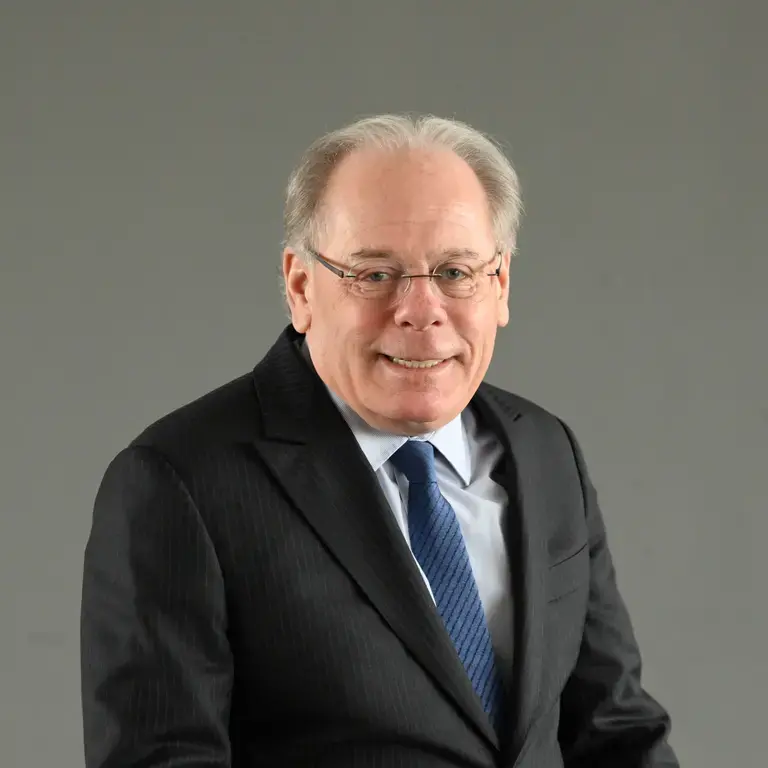
By Steven Cohen, Ph.D., Director of the M.S. in Sustainability Management program, School of Professional Studies
In December 2006, New York City Mayor Michael R. Bloomberg launched New York City’s sustainability plan, PlaNYC: A Greener, Greater New York. To mark that ongoing effort’s 20th anniversary, we are hosting a conference on December 3rd at Columbia University’s Low Library. The conference is being led by Rohit Aggarwala, a leader of the city’s sustainability planning and management process and most recently the head of New York City’s environmental and climate programs. He has been joined by his colleague Adam Freed, a veteran of PlaNYC who now serves as a leader in Michael Bloomberg’s effort to help cities around the world develop sustainability plans. Both Aggarwala and Freed teach about urban sustainability at Columbia University. The conference has attracted a number of the leaders of the original PlaNYC 2030, including my long-time colleague Professor Ester Fuchs of Columbia’s School of International and Public Affairs.
Professor Fuchs will moderate an afternoon plenary panel on the formulation of PlaNYC. Other afternoon plenary sessions will focus on the plan’s implementation and impact. In the morning, a set of detailed breakout sessions will discuss the substantive details of many elements of the plan, guided by conference papers written by experts over the past year. The conference is being co-sponsored by several organizations, including the Climate School’s Research Program on Sustainability Policy and Management and the School of Professional Studies’ Master of Science in Sustainability Management program, both of which I direct.
The conference is intended to bring together scholars, practitioners, and participants in the original PlaNYC and its subsequent iterations in the de Blasio and Adams administrations, as well as sustainability and resilience policymakers and advocates from other cities and international organizations. The goal of the conference is to understand and document the history of PlaNYC; explore its successes, failures, and limitations in New York City; and assess its global impact and interrelation with sustainability and resilience efforts in cities worldwide.
The plan was formally released on Earth Day, April 22, 2007, and included 127 initiatives, each with performance metrics designed to be reported regularly. It began when Bloomberg’s senior advisor Dan Doctoroff reported to the mayor that the city’s dynamism would add another million people by 2030 and, in his data-driven style, the mayor thought about the energy, water, and housing a million more people would need, as well as the pollution, congestion, and crowding that an unplanned increase in population would cause. PlaNYC’s central proposition was that economic growth and environmental improvement were not goals that needed to be traded off but were interconnected. Without environmental improvement, quality of life would be impaired, and economic growth would stall. I have long viewed the disproof of the economic growth-environmental improvement “tradeoff” as an inflection point in urban planning stimulated by PlaNYC. With PlaNYC, urban planning became the planning of sustainable cities.
But in addition to conceptual breakthroughs, there were also significant on-the-ground accomplishments.
PlaNYC’s air-monitoring and Clean Heat initiatives reduced pollution from dirty heating oil. By 2013, the city reported a 69% decline in sulfur dioxide since 2008 and a 23% decline in soot pollution since 2007. The Greener, Greater Buildings Plan was the precursor to Local Law 97, the city’s long-term plan to decarbonize our built environment. As difficult as it is to decarbonize a city with many old buildings, Local Law 97 is slowly being implemented.
PlaNYC helped make transit, cycling, walking, and reduced automobile dependence key elements in the city’s effort to enhance mobility while reducing congestion and pollution. Although the effort to implement congestion pricing never made it through the state legislature under Bloomberg, it finally began in January 2025 and has been a profound success. Million Trees NYC built on Bette Midler’s New York Restoration Project and reached its million-tree planting goal in 2015, two years early. Trees provide shade, absorb stormwater, and make neighborhoods more livable. While planting totals do not guarantee long-term tree survival or equitable canopy coverage, every tree planted is a tangible addition to quality of life in the city.
The plan has also had significant global as well as national influence, stimulated by Mayor Bloomberg’s leadership of the C40 Cities, focused on climate mitigation, adaptation, and sustainability planning. It is now continued by Bloomberg Associates and Adam Freed, traveling the globe to help cities develop and implement sustainability plans. According to ICLEI – Local Governments for Sustainability USA (ICLEI USA):
“Local governments are the first responders to the social and environmental challenges facing our communities. ICLEI USA’s Atlas of Sustainability Action Planning (ASAP) collects and collates the landscape of local sustainability and climate planning in the United States. Including over 1,000 plans from over 700 jurisdictions, this interactive map serves as a repository for the plans—and associated assessments, inventories, and goals—published by both ICLEI USA member governments and the wider network of cities, towns, counties, Tribal nations, and regional entities.”
The story globally is equally impressive. While there is no true global count of sustainability plans, the European Commission’s Covenant of Mayors for Climate and Energy (CoM EU) claims in a recent report that it has:
“…been instrumental in creating a community of almost 11,800 cities and local authorities in Europe and beyond, committed to fighting climate change. Over time, it has positioned itself as a key initiative, supporting local climate action by providing guidance and technical assistance, sharing of best practices and promoting peer learning opportunities.”
The most important element of all this activity is that it demonstrates that sustainability and climate planning and implementation have now been institutionalized as routine functions of local government and competent urban management. We are in a global brain-based economy, and, despite the Trump Administration’s hostility to immigration, corporations, nonprofits, and cities are in a global competition for the world’s most talented people. To win that competition for talent, organizations must locate in places where the air and water are clean, parks are plentiful and well maintained, and transportation is convenient. Sustainable cities must ensure that housing, energy, and drinking water are readily available along with high-quality education and health care. The city also must be exciting and entertaining. This past weekend, New York City hosted the NYC Marathon and the Village Halloween Parade with two million people watching each event and 60,000 people running the marathon. No one is about to run 26.2 miles or dance like Michael Jackson in imaginative costumes if the air is orange. No one is going to watch these events in person if they can’t get there by walking, biking, or subway.
New York City attracts talent despite its high costs and inconveniences because it is exciting and its streets and parks can be thrilling to behold. There is a lot of noise and garbage, but there are also iconic views and a sense that you are at the center of the universe. It’s been that way for a long time. Back in 1934, Vernon Duke wrote the song Autumn in New York, and musicians to this day sing: “Autumn in New York, why does it seem so inviting? Autumn in New York, it spells the thrill of first nighting. Glittering crowds and shimmering clouds in canyons of steel—they're making me feel I'm home.”
When faced with the need to build on that legacy at the start of the 21st century, Mike Bloomberg assembled a team of talented New Yorkers who developed a sustainability plan that has been maintained and improved for two decades. Decarbonization, clean drinking water, climate resilience, access to parks and shade, and a clean environment are now considered basic functions of competent local government. Mayor Fiorello LaGuardia once said that “there is no Democratic or Republican way to pick up the garbage.” He meant that basic municipal functions are neither ideological nor optional. Sustainability planning and management is now one of those basic municipal functions. It can, should, and will be improved, and in December we will both celebrate its beginning and learn from its successes and failures.
Views and opinions expressed here are those of the authors, and do not necessarily reflect the official position of Columbia School of Professional Studies or Columbia University.
About the Program
The Columbia University M.S. in Sustainability Management program offered by the School of Professional Studies in partnership with the Climate School provides students cutting-edge policy and management tools they can use to help public and private organizations and governments address environmental impacts and risks, pollution control, and remediation to achieve sustainability. The program is customized for working professionals and is offered as both a full- and part-time course of study.